Does the blade fit the pane?
Measure a few awkward windows in your home. A wide suction blade can cover broad panes quickly but may not fit between small glazing bars. Check whether a narrow head is included or available separately. Use the exact model identifier, since accessories are not automatically interchangeable across every generation.
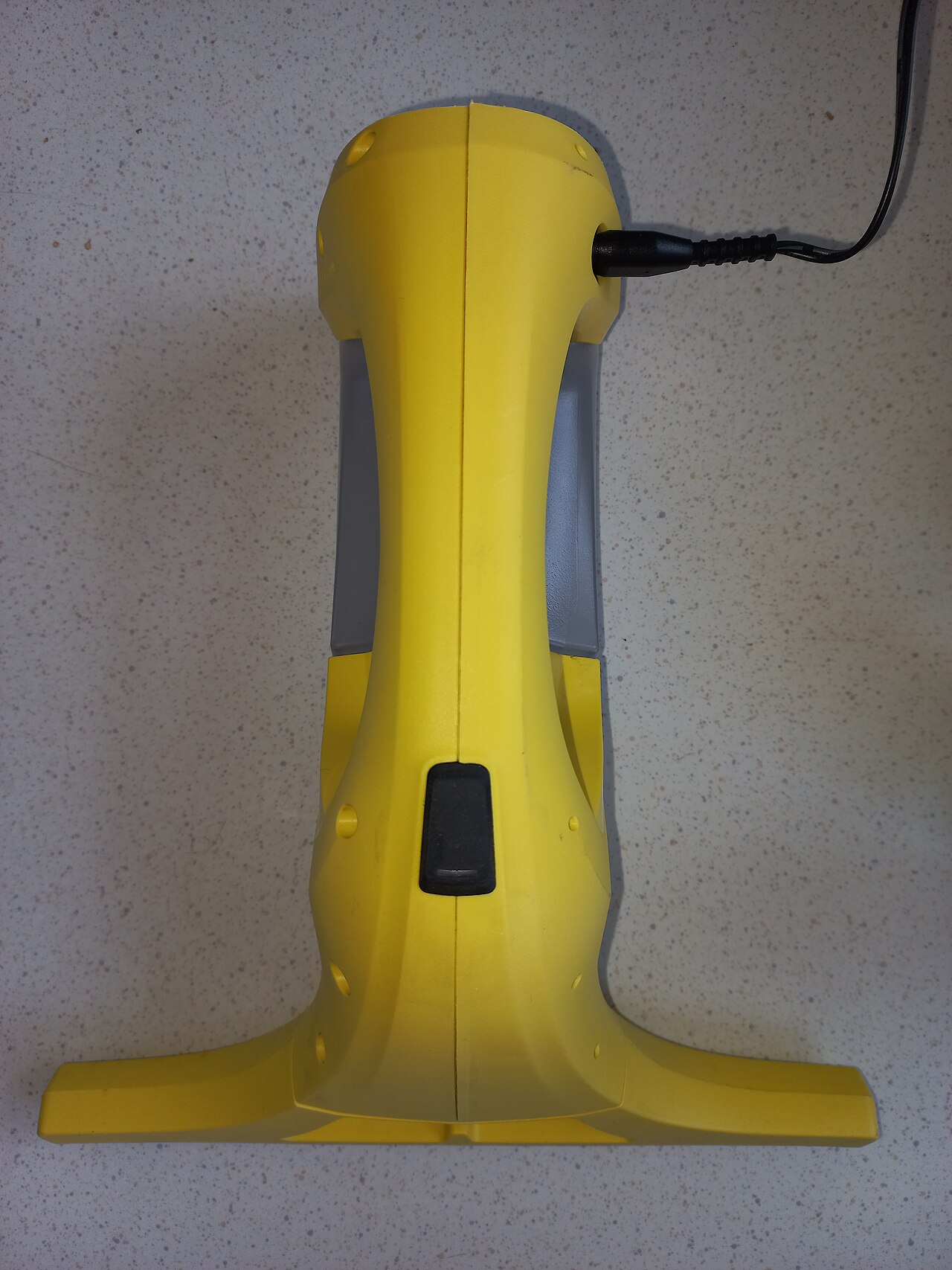
A deep sill can restrict the angle at which you hold the appliance. Look at how far its body projects behind the rubber blade. You need to reach the lower edge without pressing the tank or handle against the sill. Rehearse that movement with a similar outline before choosing entirely on working width.
Washing and suction are separate steps
A window vacuum collects water but does not necessarily replace loosening dirt. A cloth or spray bottle commonly remains part of the process. Compare the whole sequence: filling, washing, collecting water and finishing the edges. Extra battery life offers limited help if the equipment used for the first stage is awkward.
Use a permitted cleaning solution and keep the rubber lip clean. Grit or other hard debris near an edge needs attention before the blade moves across glass. Find out whether the lip can be removed and replaced. A damaged edge can cause streaking without the motor being responsible, so replaceable wear parts can matter over time.
Handling the collected water
A larger tank reduces stops but adds weight during use. Check its fill limit and permitted operating positions. Not every appliance can be used horizontally or upside down without restriction. Read how the tank comes out and rinses, so that dirty water does not have to be poured through an awkward opening.
Finally consider which windows you can reach safely. An extension changes handling and the weight at its far end. Do not compensate for inadequate reach with an unstable chair. A suitable window vacuum matches your panes, ordinary working height and the place where you can empty, clean and recharge it afterwards.