Compare the same measurement
Two sound figures become useful together only when you know what they represent. Sound power and sound pressure are different quantities. Distance and environment can affect a sound-pressure measurement. Find the explanation instead of automatically comparing the smallest number from each product page.
Look at the operating setting too. A fan's minimum figure says little about the speed required in hot weather. A washing machine may provide separate information for spinning. Write the phase or setting beside the number. If that information is absent, the comparison remains incomplete even if both figures use decibels.
Listen for sound character
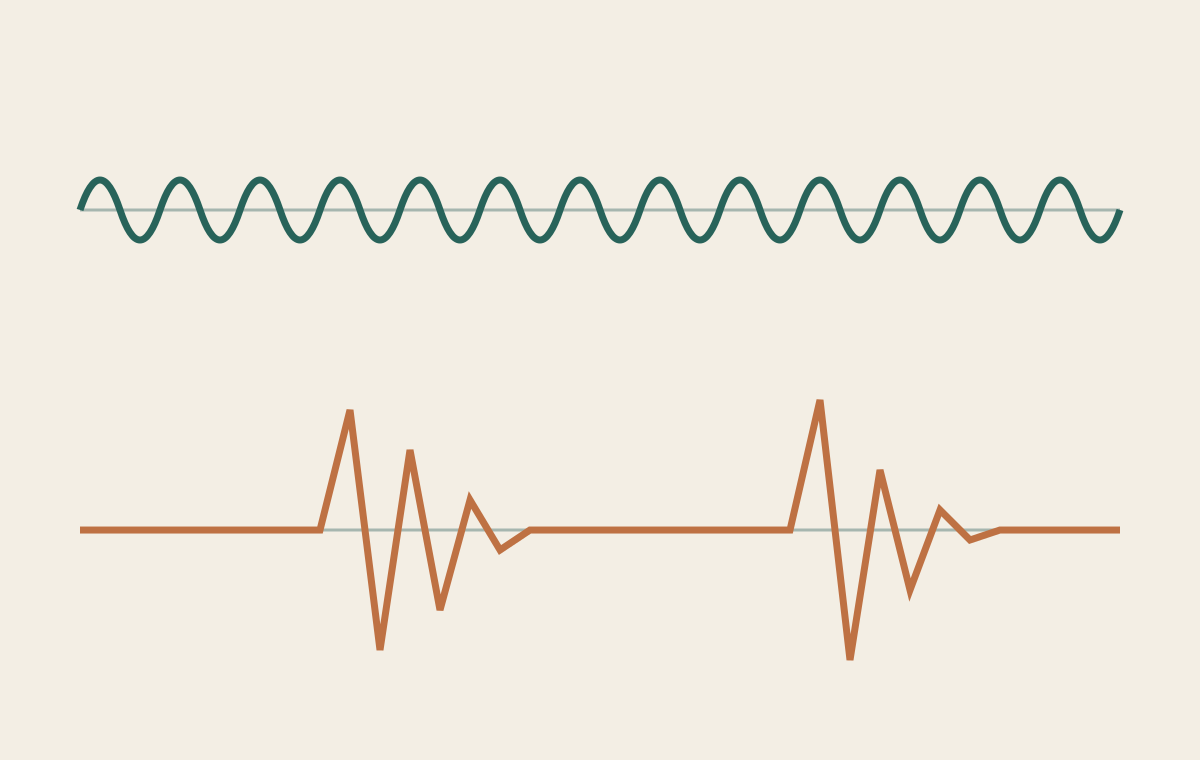
Steady rushing air can be perceived differently from a high tone, repeated clicks or frequent starting and stopping. One overall value does not fully capture those differences. A product video may reveal the type of sound present, but microphone choice and recording level make it unsuitable as a dependable loudness measurement.
During a demonstration, ask to hear the relevant operations: fan oscillation, a compressor starting or the normal working setting of a kitchen appliance. Allow for the surroundings. A busy shop masks sounds that stand out in a quiet bedroom. Your own sensitivity to particular tones remains a personal consideration rather than something a specification can settle.
Record a short listening comparison
During a demonstration, record what you hear and at which setting. Examples include continuous airflow, a click during oscillation or an audible start. These are descriptions, not measurements. Use them alongside official figures without assigning your own decibel value or objective score to the impression.
If two models are heard in different places, the surroundings remain a limitation. Equipment on a resonant shelf may add more vibration sound than the same appliance on suitable firm support. Ask whether a comparable arrangement is possible. This makes the impression more useful while remaining clear that it is not a controlled laboratory test.
Installation at home
A hard shelf, hollow cabinet or uneven floor can transmit vibration differently. Follow installation instructions and provide the prescribed support and clearances. Do not improvise a soft layer under a heavy or hot appliance without checking whether that is permitted. An unsuitable arrangement may affect stability or airflow as well as sound.
Consider when the appliance will operate. A brief daytime kitchen task creates different expectations from prolonged use beside a bed. Build a shortlist using comparable measurements, audible character and the planned operating period. The aim is not an absolute league table of quiet machines, but a reasoned choice for a known location and job.