One cabinet does not guarantee one continuous load
A washer-dryer uses the same drum for washing and drying, saving the space occupied by a second appliance. Read the washing and drying capacities separately, however. They can differ. A full washing load does not automatically fall within the limit for a following drying programme.
Consider a household that usually washes a large basket of towels. If that amount exceeds the drying limit, some items must come out after washing. The idea of setting one programme and returning to find everything dry then does not apply. For a smaller load within both limits, a continuous cycle can be convenient. Check the combination of programme and quantity in the instructions rather than relying on the two largest numbers in a product name.
Can jobs overlap?
Separate appliances allow a second wash to run while the first load dries. A combined machine cannot perform those two jobs simultaneously in the same drum. Someone who does the week's washing on one free day may notice this more than someone who processes one small load at a time throughout the week.
Sketch your busiest ordinary laundry day. Which loads need washing, which go onto an airer and which need machine drying? Treat published times as a starting point only, since sensing and load conditions can affect actual duration. The purpose is not to create an exact timetable but to identify when you would be waiting for an available drum.
Also consider what you intend to hang up between stages. Shirts, delicate fabrics or items you prefer to iron slightly damp may need different handling. An automatically linked drying programme is inconvenient for a mixed load containing clothes that cannot be tumble-dried. Sorting remains necessary even when an appliance combines two functions.
Space involves more than floor area
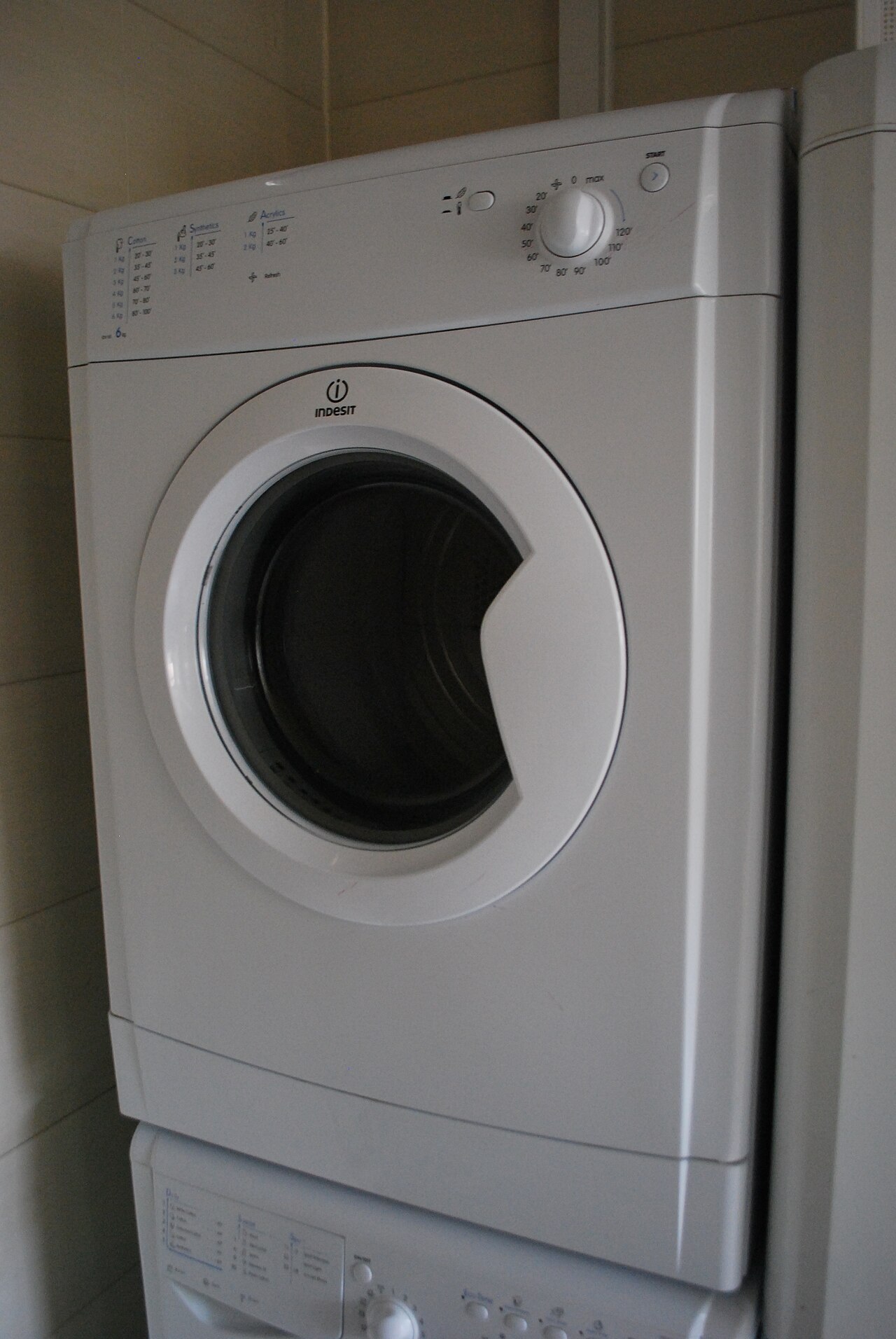
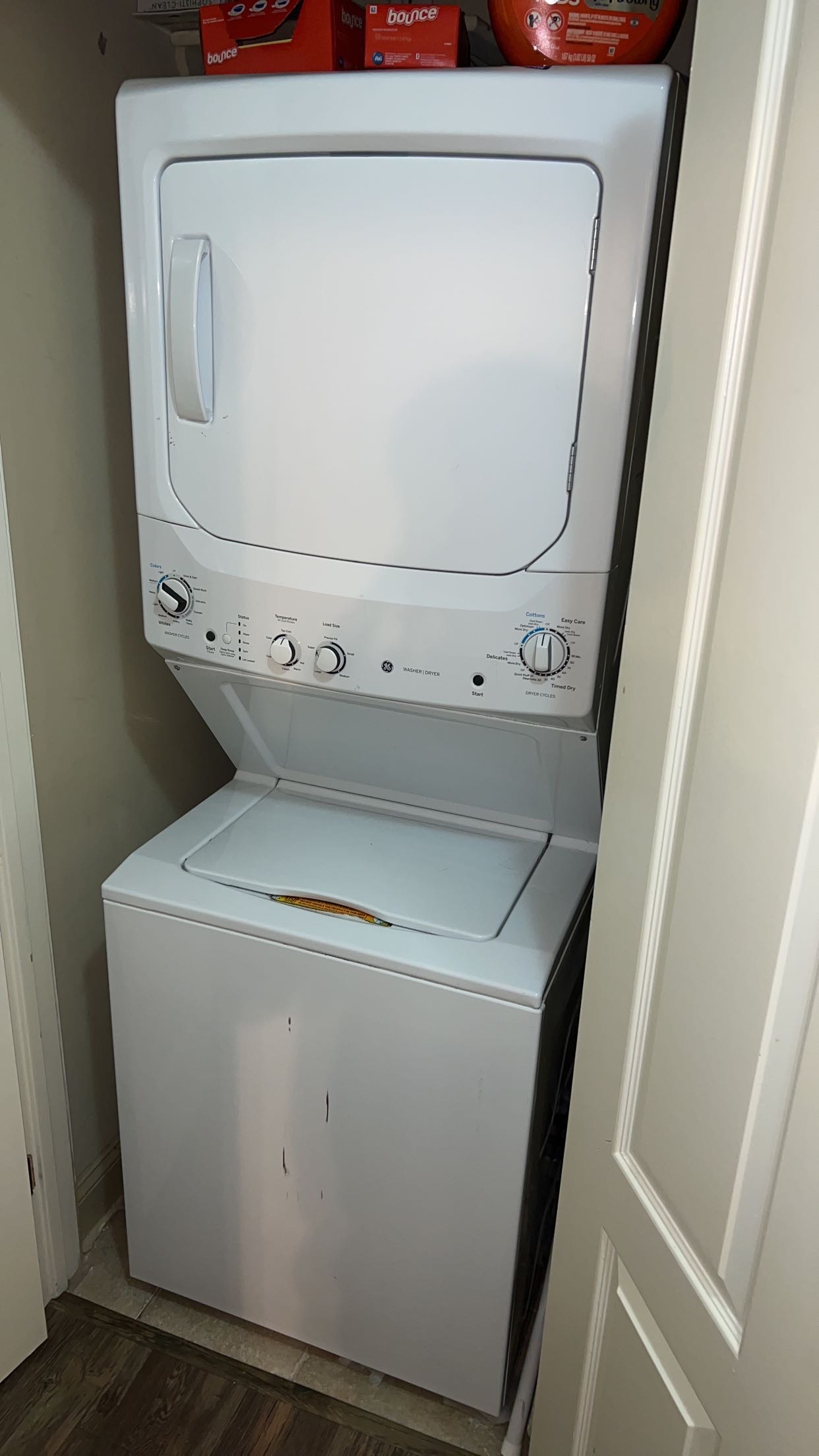
Two appliances do not necessarily have to stand side by side. Stacking may be possible with compatible models and the correct securing kit. Check the approved combination, support requirements and accessibility. Do not simply place an arbitrary dryer on a washing machine. High doors and controls still need to be comfortably usable by the person doing the laundry.
One combined appliance also requires allowance for depth, hoses and maintenance. A smaller total footprint does not resolve a narrow doorway or inaccessible drain. Compare installation drawings and consider where the basket goes with the door open. Filter cleaning and other recurring maintenance tasks need to remain possible within the same available space.
Compare costs for your routine
Examine energy and water information for washing alone and for a complete wash-and-dry cycle. Use equivalent cycle types and quantities when comparing. A favourable washing figure says little about a household that machine-dries almost every load. Include purchase, installation and any stacking accessories without treating predicted future savings as certain.
The choice becomes clearer once you name the main priority. Is there simply no room for a second appliance, or do you want several loads processed in quick succession? Both are reasonable concerns, but they may point towards different solutions. Select the arrangement that handles your laundry flow and whose capacity limitations you understand before delivery.