Read the bedding label first
Establish whether the item can be tumble-dried and what restrictions apply. Consider its filling and cover together. A spacious appliance does not make a prohibited drying method suitable. If the label is unclear, consult the bedding manufacturer's information before choosing a dryer specifically for that task.
The weight of a large item does not describe how much drum space it occupies. A lightweight but bulky duvet may have little room to move. Compare the instructions for bedding and duvets, including their permitted load sizes. A dedicated programme with an appropriate limit is more informative than the maximum cotton capacity alone.
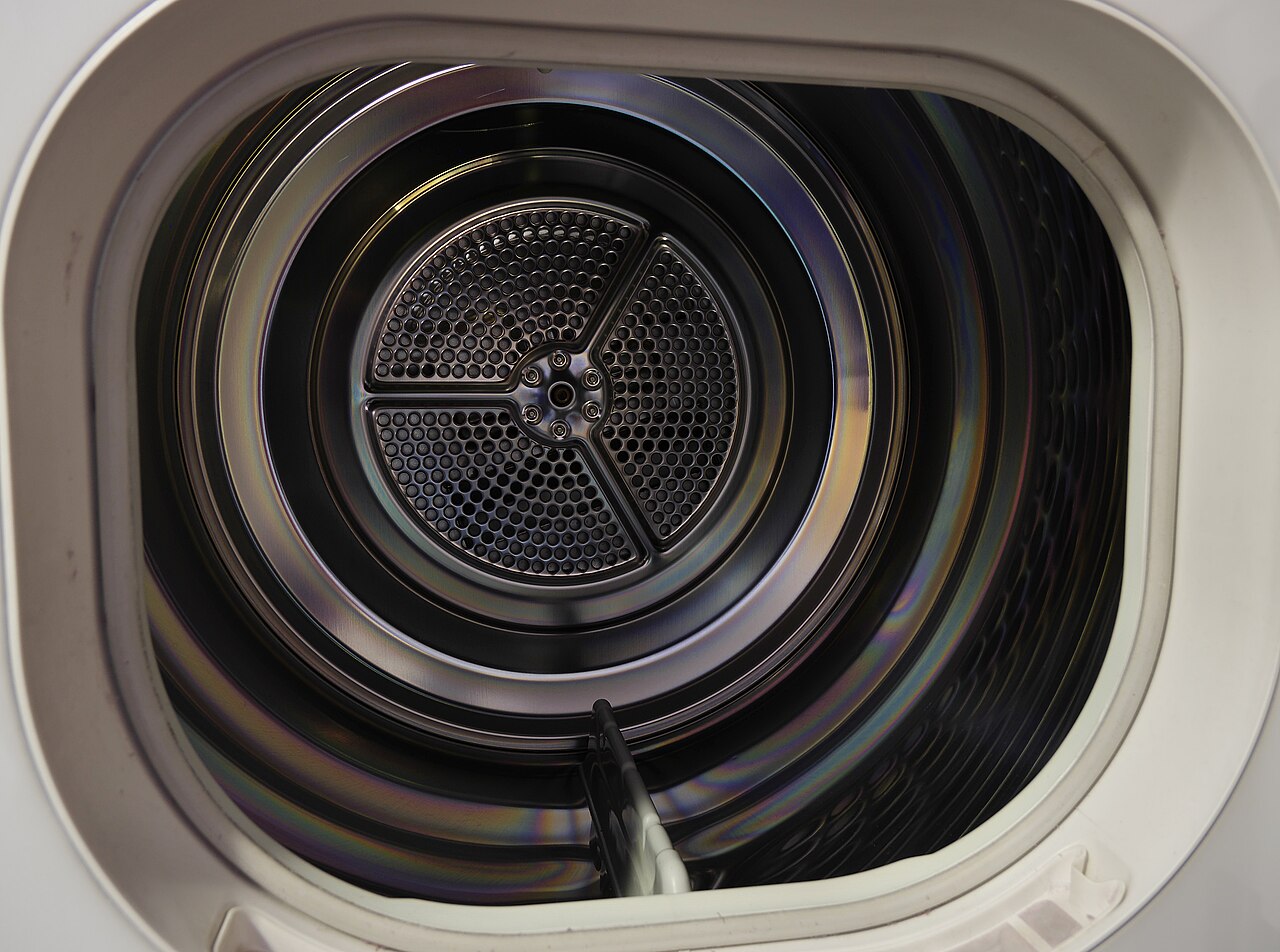
A wide opening helps with handling
You need to load the wet item and remove it later without pulling forcefully. Inspect the doorway and space in front of it. When a dryer is stacked high, a bulky bundle may be harder to manage than a basket of small clothes. Include that movement when choosing the installation arrangement, rather than checking only whether the machines physically stack.
Find out whether the instructions recommend pausing to loosen or redistribute large items. Bedding can twist together, allowing outer surfaces to dry differently from folds inside. Do not rely entirely on one corner feeling dry. The aim is for the whole item to be sufficiently dry before it is put away.
Plan the complete routine
Will the dryer mainly handle sheets, or do you intend to process a thick duvet regularly? Those are different tasks. If an unusually large item falls outside the instructions, a suitable external laundry facility may be a better answer than overfilling the drum at home. Do not automatically choose your everyday machine around one unsuitable exceptional load.
For your normal bedding, compare programmes, access and maintenance points. Clean filters as instructed after use, and store textiles only once seams and folds are dry as well. Avoid a universal drying-time promise: material, dimensions, starting moisture and movement within the drum all influence the time required.