Find the lowest obstruction
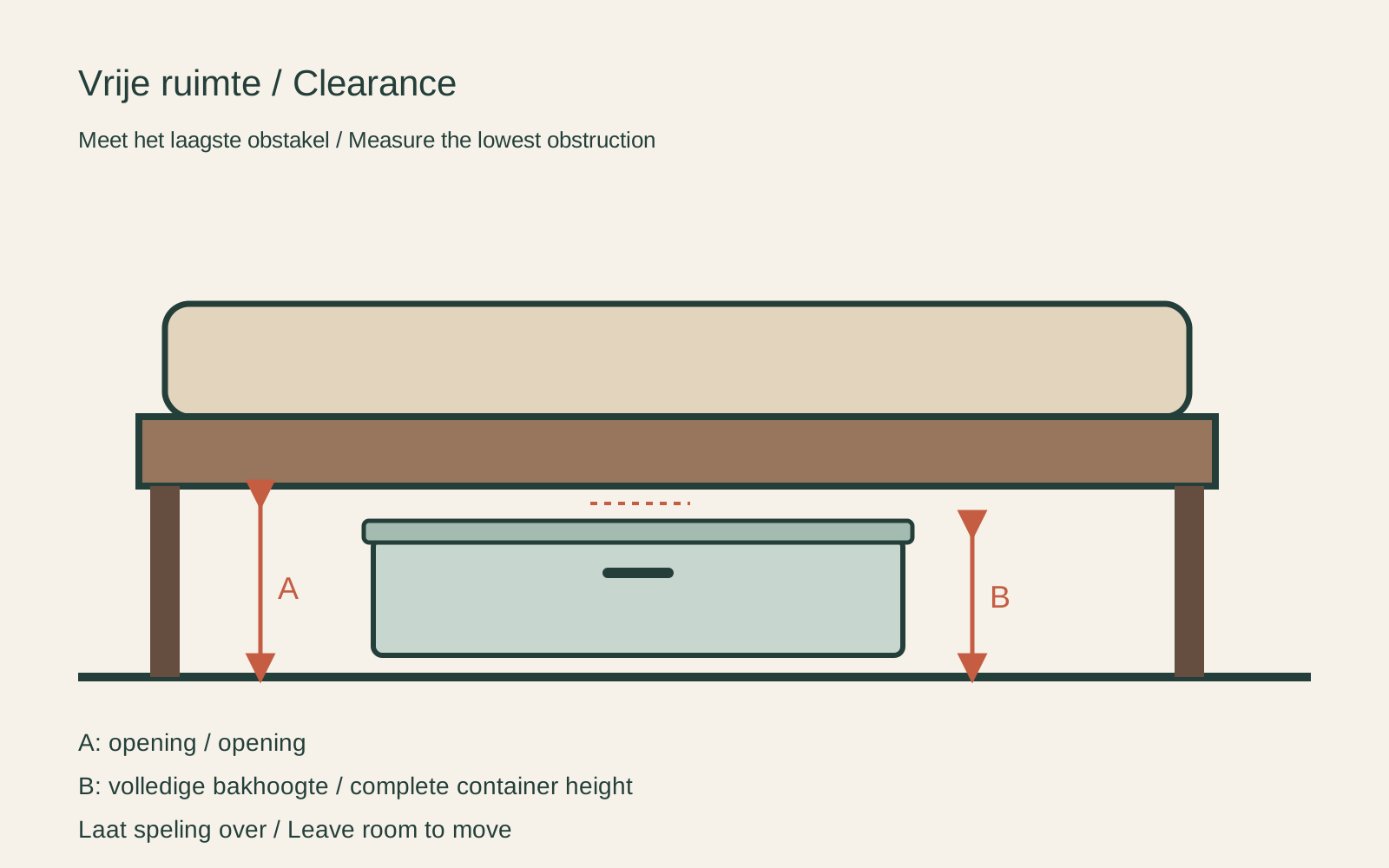
Measure from the floor to the lowest part the container must pass beneath. That may be the bed's side rail rather than the mattress base. Check at several points because a centre support, bracket or sagging fabric cover can reduce clearance. The height of the mattress above the floor is not the useful measurement.
If a box has wheels, handles or a raised lid, include them in its full height. A soft storage bag can bulge when filled, so its empty dimensions may not predict the loaded shape. Leave enough clearance to move the container without scraping or forcing it through the opening.
Measure the usable path
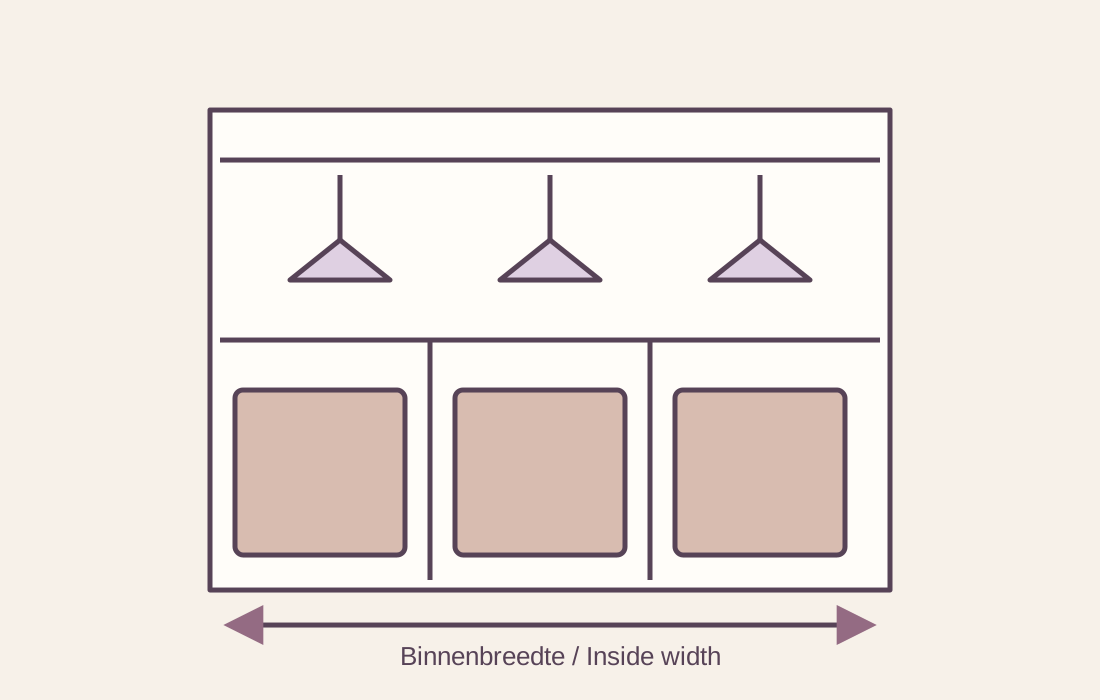
Bed legs and centre supports divide the space into smaller areas. Sketch them and mark the direction from which you plan to pull the storage out. A long box may fit underneath but be impossible to turn past a leg. Nearby furniture can block the final part of the route into the room.
Check floor coverings too. Wheels that move easily on a hard floor may behave differently on a rug, while a low box can catch at a change in floor height. Do not assume that adding castors later preserves the clearance you measured. The complete container needs to be assessed as one object.
Decide what belongs there
Items used occasionally can suit under-bed storage, provided they can be kept in an appropriate condition. Frequently used things may be frustrating if reaching them means moving furniture every day. Consider a dust-protecting closure and whether the contents should remain visible or labelled on the accessible end.
Store only clean, dry items and follow any ventilation guidance for the bed and stored materials. A sealed-looking bag does not solve a damp environment. Keep the area accessible for cleaning rather than filling it so tightly that dust and forgotten objects become difficult to remove.
Check lifting and pulling
A large container can become heavy when filled. Choose handles designed for the load and avoid pulling by a decorative tab or loose lid. Smaller containers may be easier to retrieve than one large unit, even if the total litres are slightly lower. Think about the person who will actually reach under the bed.
Before buying several pieces, make a cardboard outline or test one container with representative contents. Check entry, closure and removal in the real room. Record the limiting height, width and depth rather than only the bed's advertised size. Storage that comes out easily is more useful than capacity you cannot comfortably access.