Start with the furniture
A rug rarely sits alone. It connects a seating group, lies beneath a dining table or provides a landing area beside a bed. Measure the furniture and the space you use around it first. Labels such as large or medium say little without a real plan of your room.
Mark two possible sizes using removable tape or sheets of paper. View both from the doorway and from your normal seat. A small rug may disappear between substantial furniture, while a larger one can reach doors or walking routes. The relationship matters more than a single supposedly correct size for every room.
In a seating area
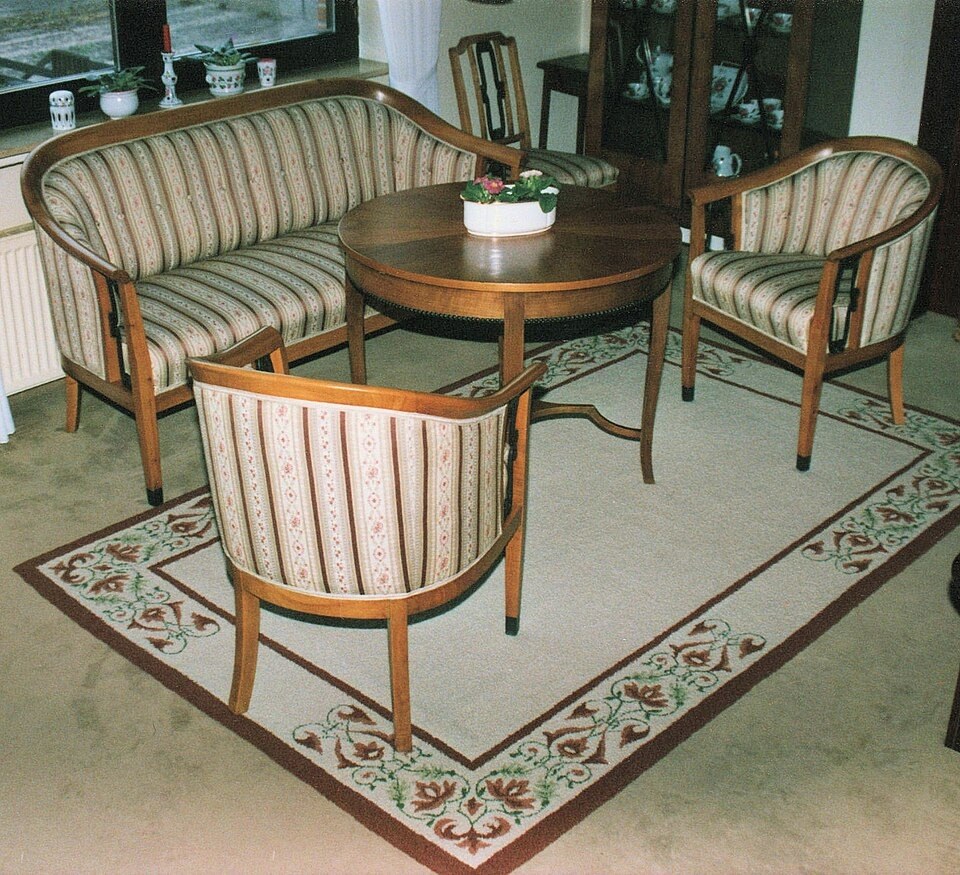
Decide whether the rug will sit beneath all the legs, the front legs only or entirely in front of the sofa. Apply the same reasoning to nearby armchairs unless a different arrangement is intentional. A partly supported chair may rock on a thick rug. Check the transition with the actual furniture legs rather than only a rectangle on paper.
Do not use the coffee table as the sole reference. A rug that fits precisely beneath it says little about the whole seating group. Check where your feet land and whether an edge crosses a frequently used route. If uncertain, move a chair first; changing the furniture arrangement can solve more than simply buying a larger rug.
Beneath a dining table
Pull the chairs back as you would when standing up. Their rear legs should not catch the rug edge during every movement. Measure that extended position on each side used daily. Remember an extending table if you regularly accommodate more people.
A low pile is often easier with sliding chairs and crumbs, but examine the backing and its compatibility with your floor as well. An underlay may provide grip when both products are suited to that combination. It also adds thickness, which matters near doors and adjoining floor levels. Check the whole assembly rather than the rug alone.
Beside and beneath a bed
Measure where your feet reach the floor when you get up. A rug that disappears far beneath the bed but barely projects at the sides offers little usable landing area. With separate runners, check that they do not shift when stepped on. Allow for drawers that slide out from under the bed.
A large rug beneath a heavy bed is harder to remove for cleaning. That need not rule it out, but maintenance must remain possible. Consider whether your vacuum head reaches beneath the furniture and whether you can manage the specified cleaning method at home.
Size is not the whole decision
Alongside dimensions, check pile height, edges, backing and any suitability for underfloor heating. Use the product information rather than relying only on a room photograph. Observe the relevant clearance instructions around heat sources. After delivery, lay the rug flat and assess its actual dimensions before moving heavy furniture permanently onto it.