Splashes differ from humid air
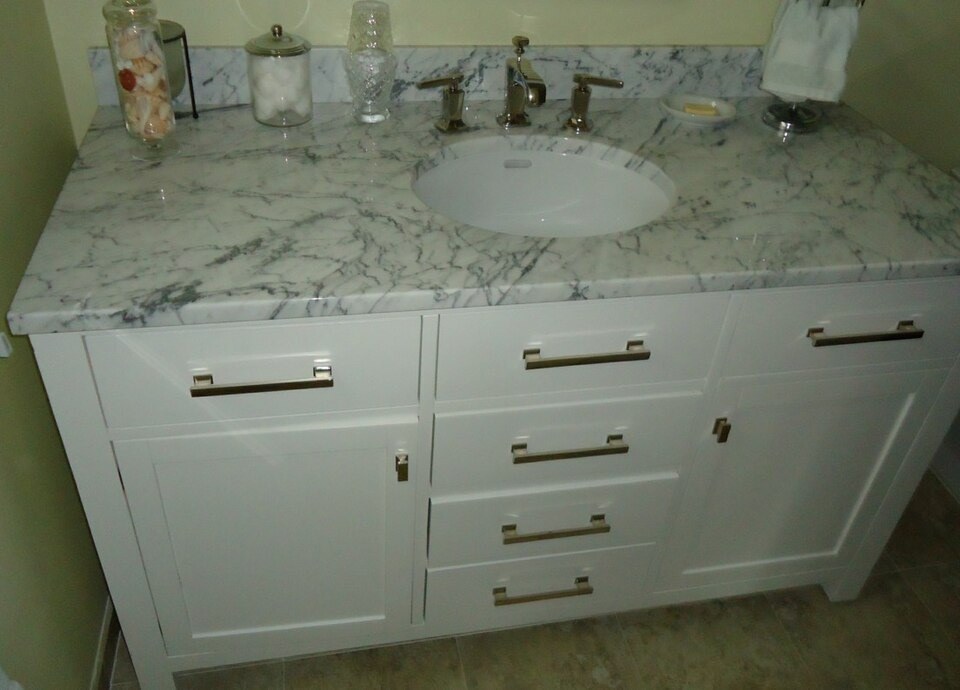
A cabinet beside a basin faces different conditions from a shelf across the room. Notice where droplets land and where condensation remains. A general bathroom-furniture label does not mean every surface can stay wet continuously. Read the placement and care instructions for the exact product.
With board-based furniture, inspect edges, drilled holes and joints where water can collect. Metal wire baskets have joints and coatings that need attention if damaged. Plastic may wipe clean easily, but still needs enough strength for full bottles. Assess the material and the construction together rather than treating either as a complete answer.
Bottles need room to come out
Measure the tallest bottle used daily, including its pump. Allow space to lift it or press the dispenser. A shelf that only just fits its height may be frustrating in use. In a deep cabinet, small jars disappear behind taller bottles; shallow removable trays can make contents easier to see.
Beneath the basin, waste pipes and connections reduce usable space. Compare the furniture's technical drawing with your existing installation. Do not cut away structural parts simply to accommodate a trap. Necessary connections should remain accessible for maintenance and checks for leaks, even after the cabinet is filled.
Cleaning without dismantling the room
A loose basket is easy to remove, but several tiny baskets may create many extra edges to clean. Consider whether you can clean the base without holding every product separately. Objects standing on the floor complicate mopping. Wall mounting can free space, provided the wall and fixings suit the loaded weight.
Consider the room's ventilation too. Another cabinet will not solve a moisture problem. Avoid storing wet textiles for long periods in a closed compartment, and let washed trays dry before replacing them. Check hidden undersides periodically, because moisture can collect where it is not immediately visible.
Some supplies can live elsewhere
Reserve stock used infrequently can often stay in a drier location. Keep the basin area for objects actually used there each day. Store electrical devices and other products according to their own instructions; an available shelf is not automatically a suitable storage location. Reducing the reserve stock can make a small cabinet work better without installing a larger one.