Filling, lifting and pouring
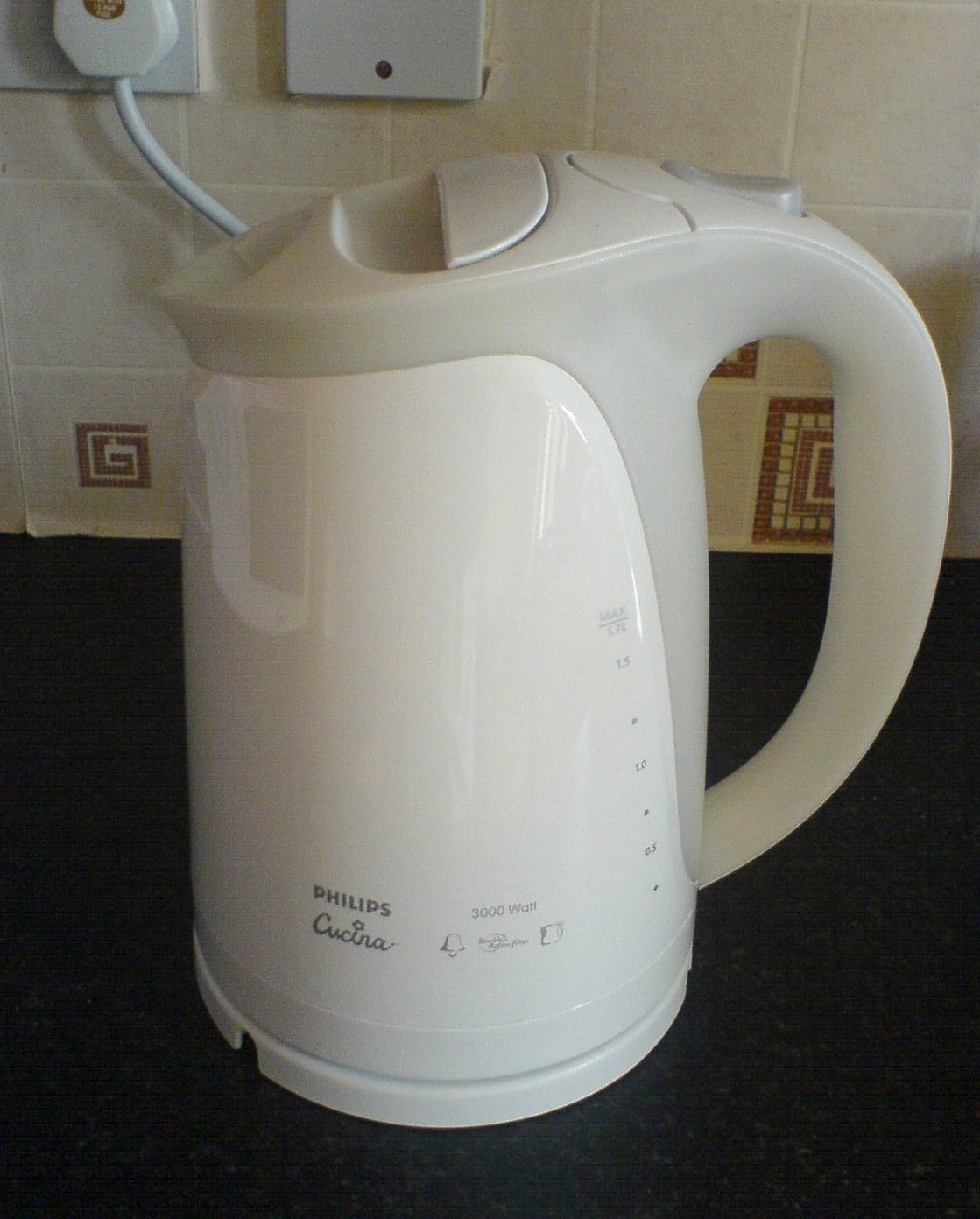
Consider how much water you usually need. A large jug helps when making several drinks, but check its minimum fill as well. If you normally prepare one mug, a generous maximum is less useful when the permitted minimum greatly exceeds that serving. Compare the scale with the actual capacity of your mug.
The markings should be visible from your normal position. Some windows sit behind the handle or on only one side. This may matter depending on which side of the tap the kettle occupies. Check whether filling through the spout is permitted or the lid must be opened, following the particular model's instructions.
Water adds weight, so do not assess only an empty display jug. Look at the handle angle and how far you must tilt to pour the final portion. Large capacity can become inconvenient if you prefer a lighter appliance. Filling less is an answer only while remaining above the permitted minimum level.
Match the spout to the task. Pouring into an ordinary mug demands less precision than manually brewing coffee with a controlled narrow stream. A long spout may aim more accurately but takes additional space and is unnecessary for some users. Avoid choosing an unusual shape entirely because it looks attractive on the counter.
Lid, filter and base
Check how the lid opens and whether the filling opening is accessible. Allow for hot steam after use and refill according to the instructions. A removable scale filter may simplify maintenance, but replacements need to match the exact model. Establish how the interior can be inspected and descaled without using unsuitable products.
Measure the base and inspect cable routing. The kettle should stand securely away from the counter edge, without a loose lead across a walking route. A comfortable choice combines suitable minimum and maximum capacities with a handle and spout you can use easily every day, rather than relying on capacity alone.