The vessel you use
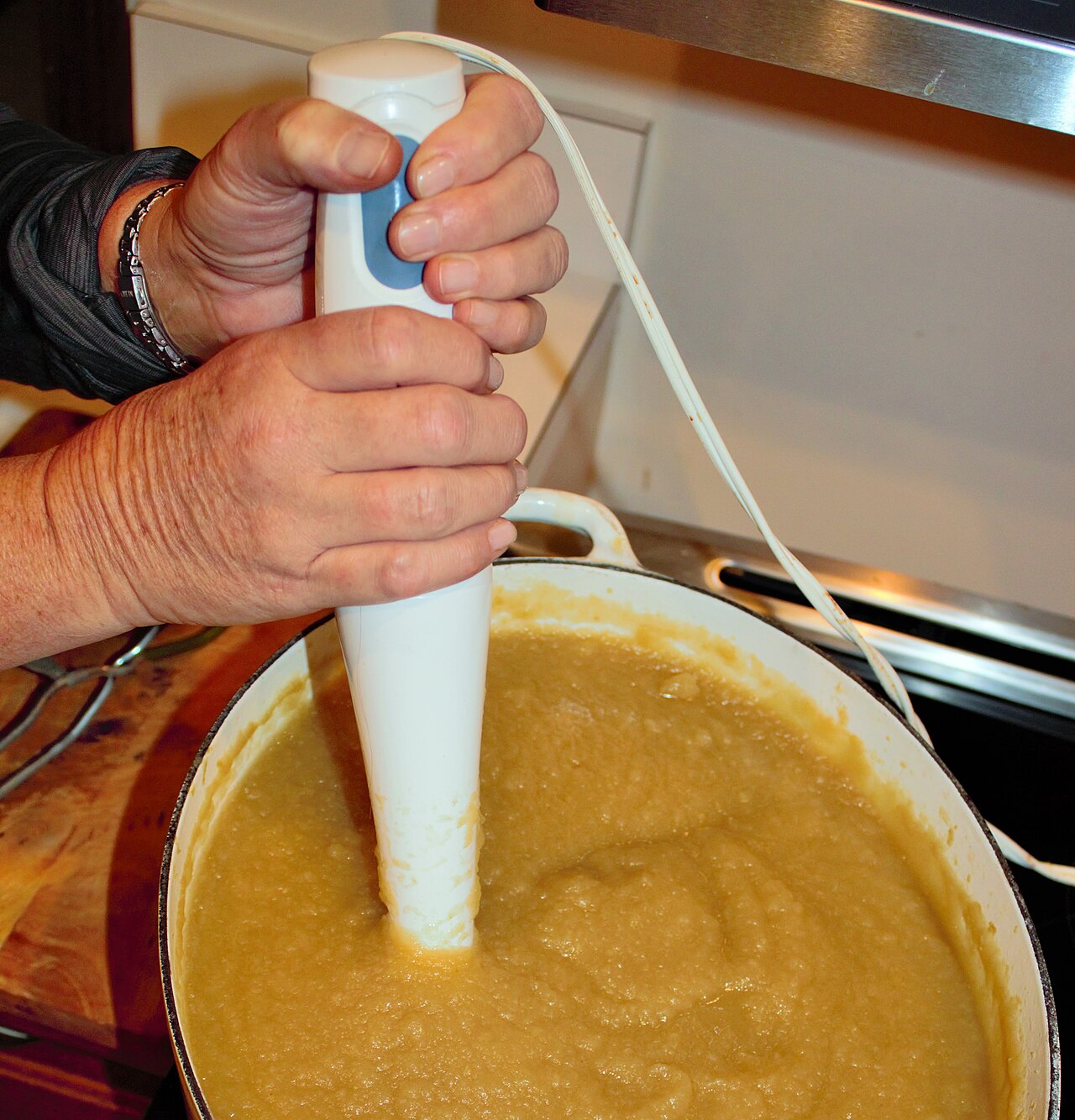
Think about your usual containers: a tall beaker, a small saucepan or a large soup pot. The blending foot needs to fit and reach the required depth. Check the permitted immersion level in the instructions. The motor housing is not automatically part of the section that may enter liquid.
For warm preparations, temperature limits and the prescribed method matter. Remove the pan from heat where instructed. Put the foot into the liquid before starting and allow for splashes. A powerful motor is not a reason to work with an overfilled pan and no headroom above the mixture.
Operating with one hand
Inspect the start button and speed control. Can you use them while holding the appliance comfortably? A safety control may deliberately require an additional action. That is not necessarily inconvenient, but you should understand the sequence before handling a heavy pan or hot contents.
Consider weight and lead length in the actual kitchen arrangement. A cable routed across a hob is an awkward starting point. With a cordless model, charging and available operating time become part of the routine. Compare those practical details before treating a higher motor-power figure as the decisive advantage between models.
Attachments have their own limits
A chopping bowl, whisk and potato-mashing foot are different tools. Establish which are included and the quantities they are intended to process. A small chopper does not automatically replace a full-size food processor. Check whether ice, nuts or very thick mixtures are permitted; continuing to run longer is not a remedy for an overloaded appliance.
Look at how the shaft detaches for cleaning and which sections may become wet. A removable foot helps when it is accessible without contact with the blades. Choose around frequent preparations and parts you will actually maintain. A compact set suited to your pans can be more useful than a large box of attachments with no clear role in your cooking.