Give the pan a clear job
An omelette pan does not need the same dimensions as a pan for cooking several portions at once. Start with the meals you actually make and look at the flat cooking surface. Sloping walls can make tossing or sliding food easier, but they also reduce the area available at the base. A large rim measurement is not a guarantee that four pieces of food will fit without overlapping.
Notice the weight and the way the handle sits in your hand. A pan that feels manageable empty may be tiring when full. If you normally move food into the oven, check the limits for this exact pan and its handle rather than borrowing a temperature from another model in the range.
Read the care instructions before the label
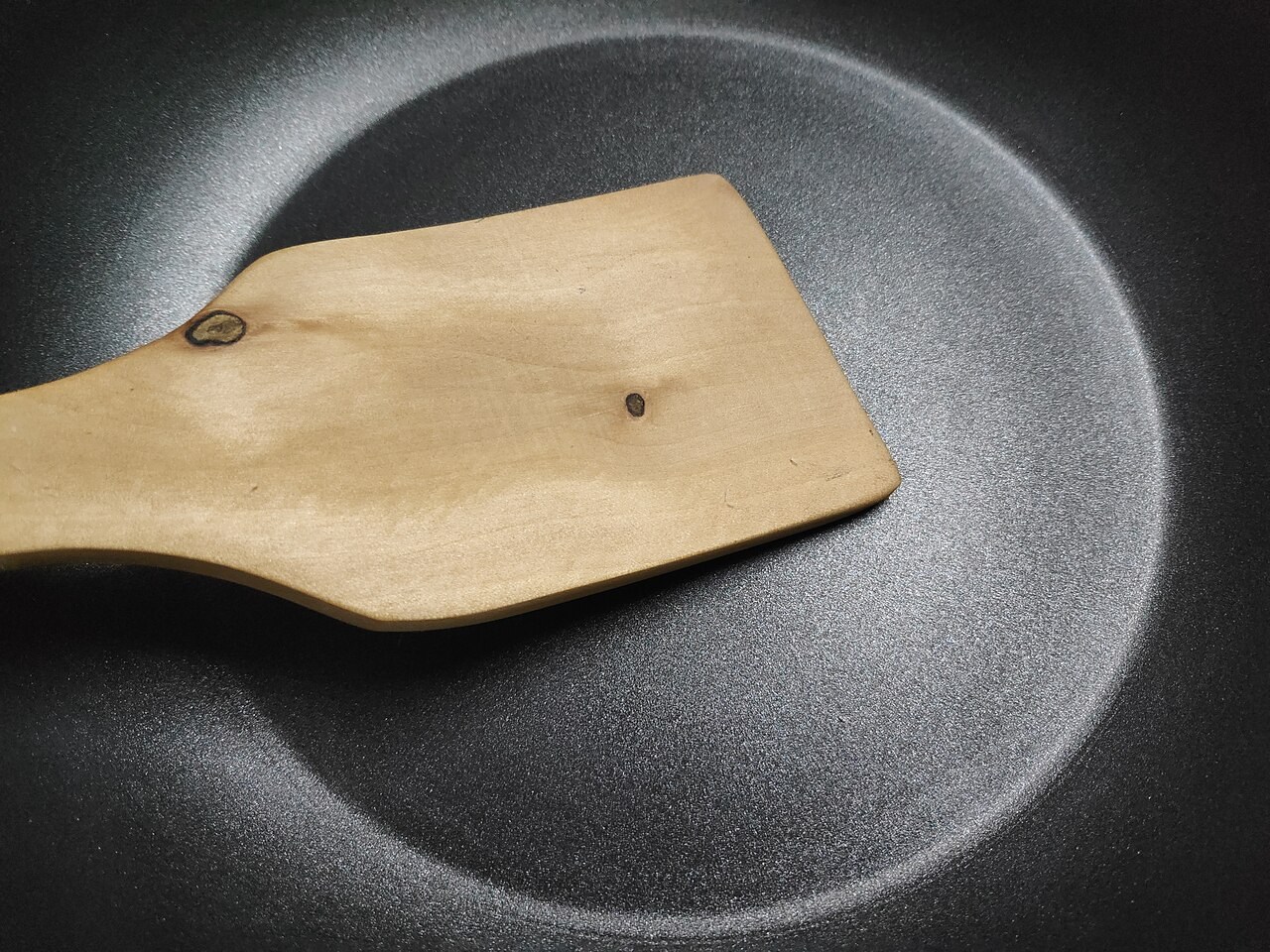
Non-stick coatings differ, and a broad marketing name does not replace instructions. Look for the recommended heat range, permitted utensils and cleaning method. Do not assume that a claim of scratch resistance means every metal tool is recommended. Equally, dishwasher compatibility may be a different question from the maker's preferred method for preserving the surface.
Think about the people sharing the kitchen. If someone routinely cuts food in the pan or stacks heavy cookware directly on its surface, changing the storage and utensil routine matters more than selecting another expensive coating. A pan protector or separate shelf can prevent avoidable contact when the cookware is put away.
Compare ownership, not a promised lifespan
There is no useful universal replacement interval for all non-stick pans. Condition depends on the product and how it is used. Examine an existing pan for visible damage and follow its maker's advice about a deteriorating coating. Buying a new pan without changing the cause of damage can simply repeat the same problem.
Before paying, compare hob compatibility, actual base dimensions, weight and any separately priced lid. Keep the packaging and care information until you have checked the fit at home within the seller's return conditions. A straightforward pan suited to your cooking routine can be a better purchase than a feature-heavy model that needs treatment nobody in the household will follow.