Collecting water or draining it directly
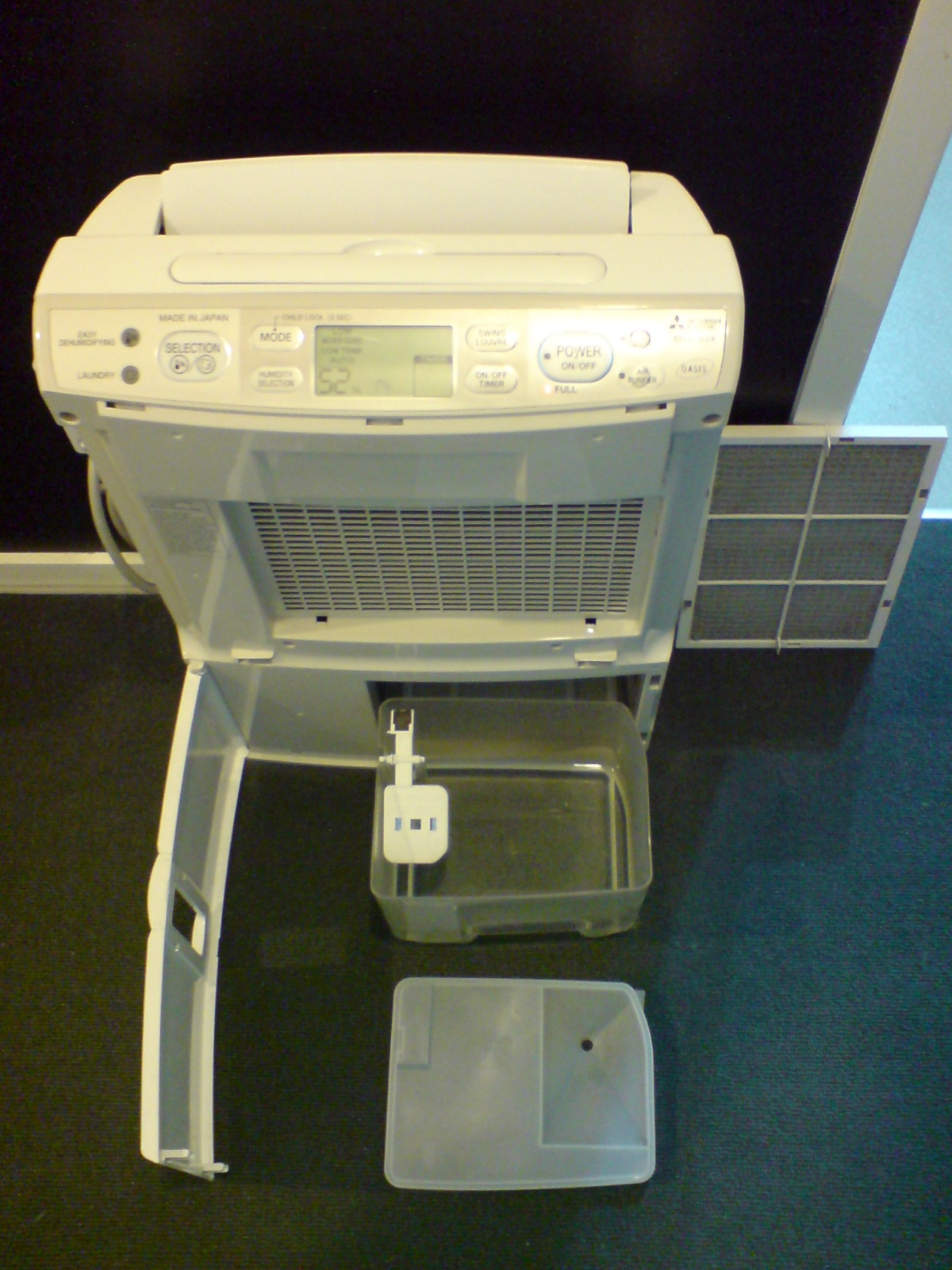
An integrated container lets you move a dehumidifier between suitable locations without making a drain connection each time. In return, you must carry the collected water away regularly. Examine the container's shape and removal direction. A large tank with an awkward grip can feel more cumbersome than its capacity figure suggests.
Check how the appliance signals a full tank and whether operation stops. Tank capacity is different from the litres the machine can extract per day under test conditions. A large extraction claim therefore does not imply that the built-in container holds the same quantity of water, or that it can be left indefinitely without attention.
Many designs drain by gravity. The hose then needs an approved downward route to a lower discharge point. An uphill loop or kink can prevent water leaving. Consult the model instructions for the connection, hose diameter and placement; do not simply use a tube because it happens to fit over the outlet.
A drainage pump may offer other possibilities, but its presence cannot be assumed from the words continuous drainage. Ask explicitly whether there is a pump, what its limits are and which parts are additional. An improvised raised position on unstable furniture is not a satisfactory way to make an unsuitable location work.
Drainage still needs checking
Arrange the hose so that a door or passing foot cannot move it. After initial operation, check that water reaches the intended discharge point and that the connection remains dry. Keep the route accessible for inspection. The convenience is reduced if checking it means moving a heavy cupboard every time.
For an appliance moved regularly between rooms, a tank can be simpler to organise. For extended use in one appropriate place, an approved drain arrangement can reduce emptying work. Compare your routine with the real water route. The choice involves carrying, inspection and available connections, not just the size of the container.