Start with room volume
Measure length and width, but consider ceiling height as well. Two rooms with equal floor area can contain different volumes of air. An open connection to a corridor or kitchen also changes the situation compared with a closed bedroom. Record those conditions before comparing recommended square-metre figures.
A manufacturer's coverage claim may assume a particular number of air changes or use its own test method. Find the explanation. A large area on one box is not directly comparable with another brand's figure if their assumptions differ. Ask about the underlying airflow performance and the setting used to achieve it.
CADR and operating speed
CADR describes clean-air delivery under the relevant measurement conditions. Check which pollutant and test method the figure concerns. It is not a universal score covering every substance and situation. A mechanical particle filter and a layer intended for certain gases perform different functions, so one filter label should not be treated as evidence for both.
The highest figure is not necessarily delivered in a quiet night mode. Compare sound, airflow and consumption at a usable setting. If you intend to run the appliance almost exclusively at minimum speed, maximum performance alone is insufficient to support the choice. Ask for information at several settings where available.
Positioning and filter care
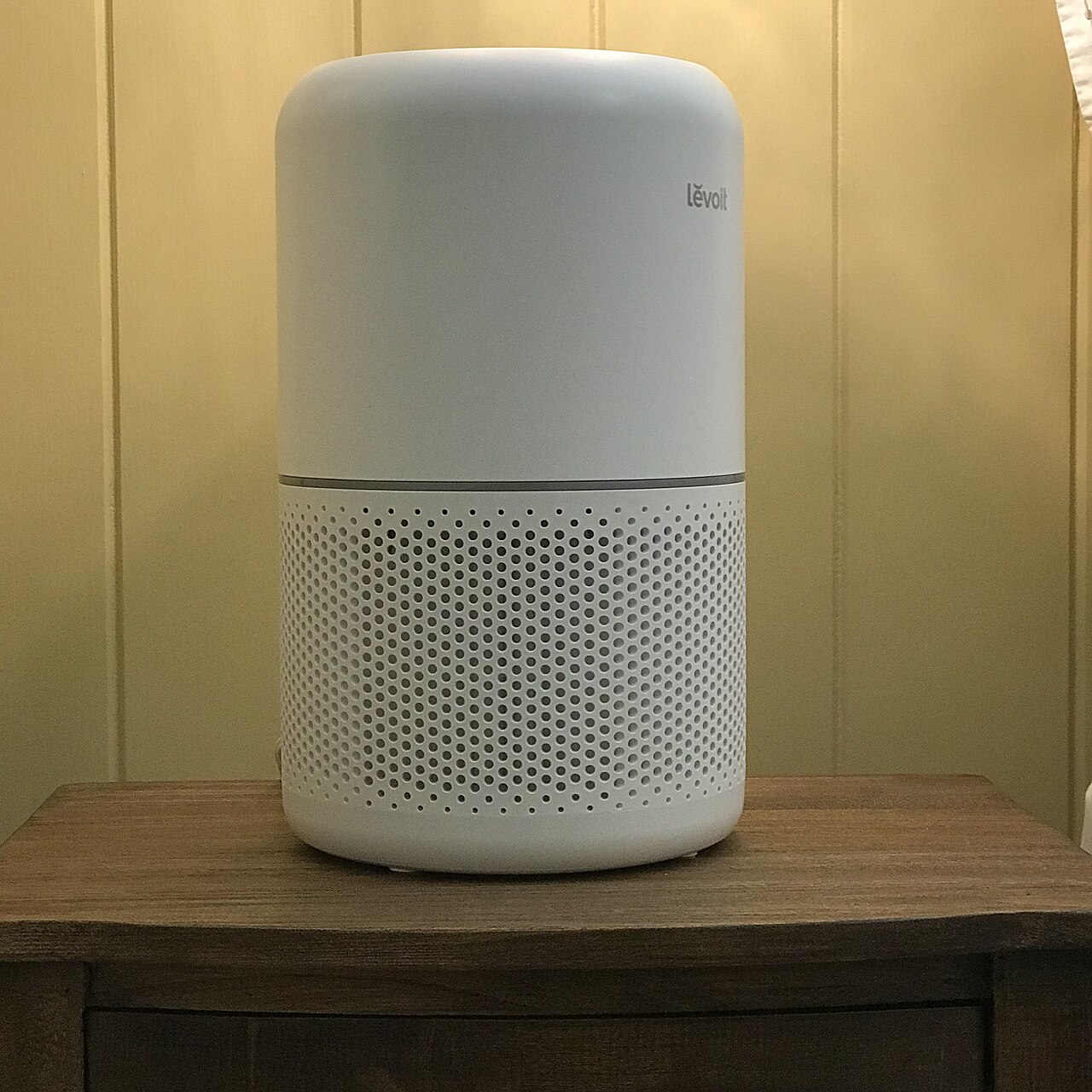
Place the purifier where air can reach the inlet and leave the outlet freely, following its instructions. Behind a curtain or tightly between furniture may be unsuitable. Measure the surrounding space and ensure that the filter can still be removed. A model with filter access underneath may need lifting or tipping for maintenance.
Before purchase, check the price and availability of the precise replacement filter. A suggested replacement interval is not a fixed promise for every household, because use and airborne loading differ. An indicator may flag maintenance, but read what it actually measures or counts. Remove any transport wrapping from new filters as directed before operation.
A calculation for reading coverage claims
Imagine a room four metres long, three metres wide and two and a half metres high. Its volume is thirty cubic metres. A theoretical flow of one hundred and fifty cubic metres per hour corresponds arithmetically to five room volumes each hour. This illustrates the relationship between volume and flow; it is not advice that five is the correct target for every situation.
Air in a real room does not always mix evenly. Furniture, open doors and inlet position change its path. You also need to know whether the figure describes clean-air delivery or merely air moved. The calculation is therefore most useful for exposing assumptions behind a coverage claim.
When figures are unclear, ask about the assumed ceiling height, number of air changes and operating speed. If two manufacturers state these differently, a direct square-metre comparison has limited value. Compare the underlying information available and acknowledge what remains unknown rather than filling the gap with a confident ranking.
Choose for the room where the appliance will spend most time. A model advertised for a large open space at maximum output presents different trade-offs in a quiet bedroom. Its function needs to suit the setting you will actually tolerate, not only the strongest setting used during a test.
What it does not replace
An air purifier does not replace ventilation or addressing a pollution source. Cooker extraction, removing settled dust and avoiding unnecessary smoke remain separate measures. Choose an appliance for a defined task in a known space. Medical outcomes or complete elimination of all pollution cannot reasonably be inferred from a room-size claim or filter name alone.