Local marks or broad areas?
A compact spot cleaner with a hose handles differently from an upright appliance intended for larger floor areas. Describe the task that occurs most often. One spilled drink on a chair does not involve the same movements as cleaning carpets across several rooms, so the largest-looking machine is not automatically the most convenient choice.
Always establish whether the material permits wet cleaning. Read the care label and guidance from the carpet or upholstery supplier. A machine capable of recovering water does not make every fabric suitable for water and detergent. Testing a permitted method in an inconspicuous place remains sensible where the instructions allow it.
Two tanks and a hose
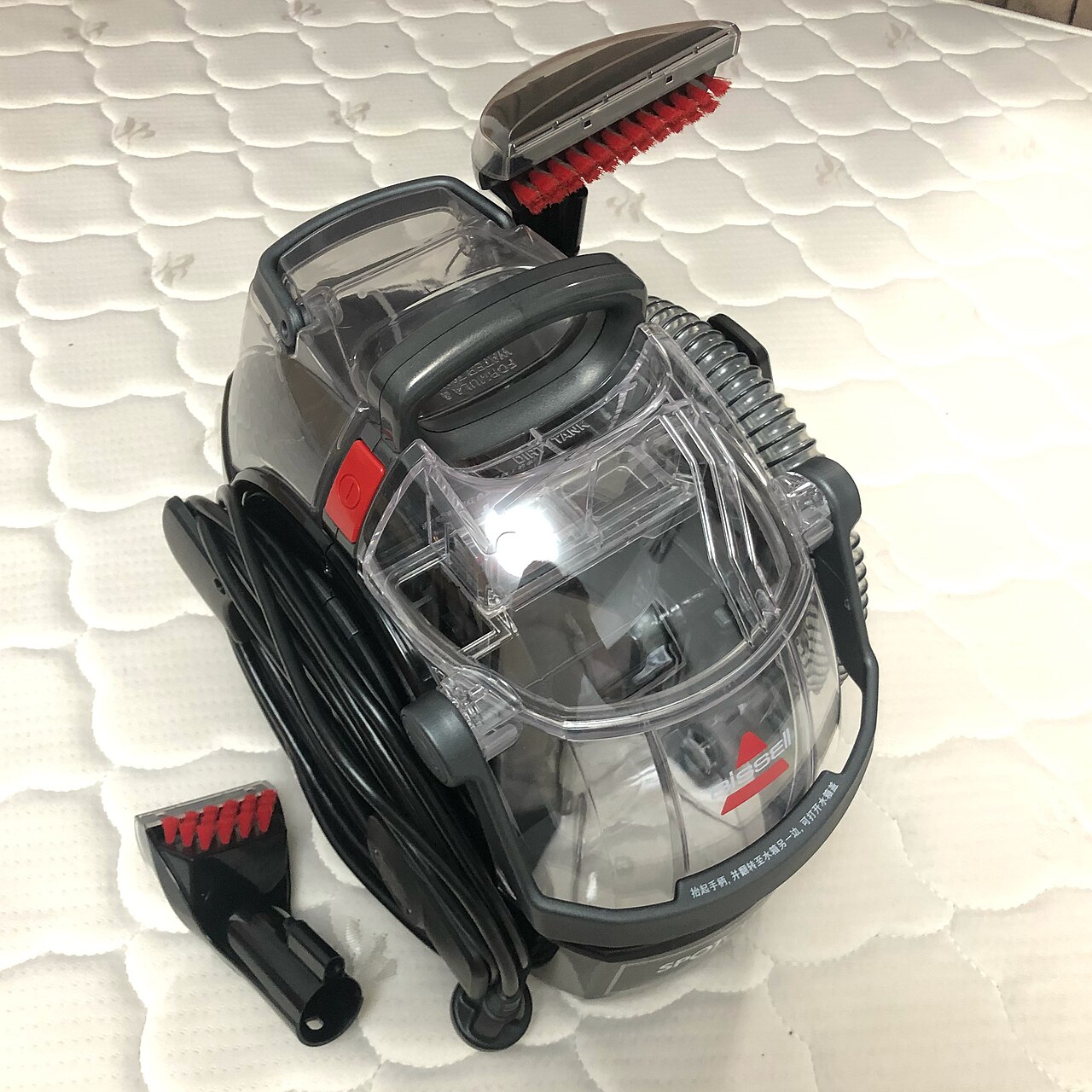
Many machines separate clean solution from recovered dirty water. Inspect capacities, handles and the way each tank is removed. A larger tank reduces interruptions but weighs more when carried. Check whether it fits under your tap and whether the dirty tank has an opening wide enough for thorough rinsing.
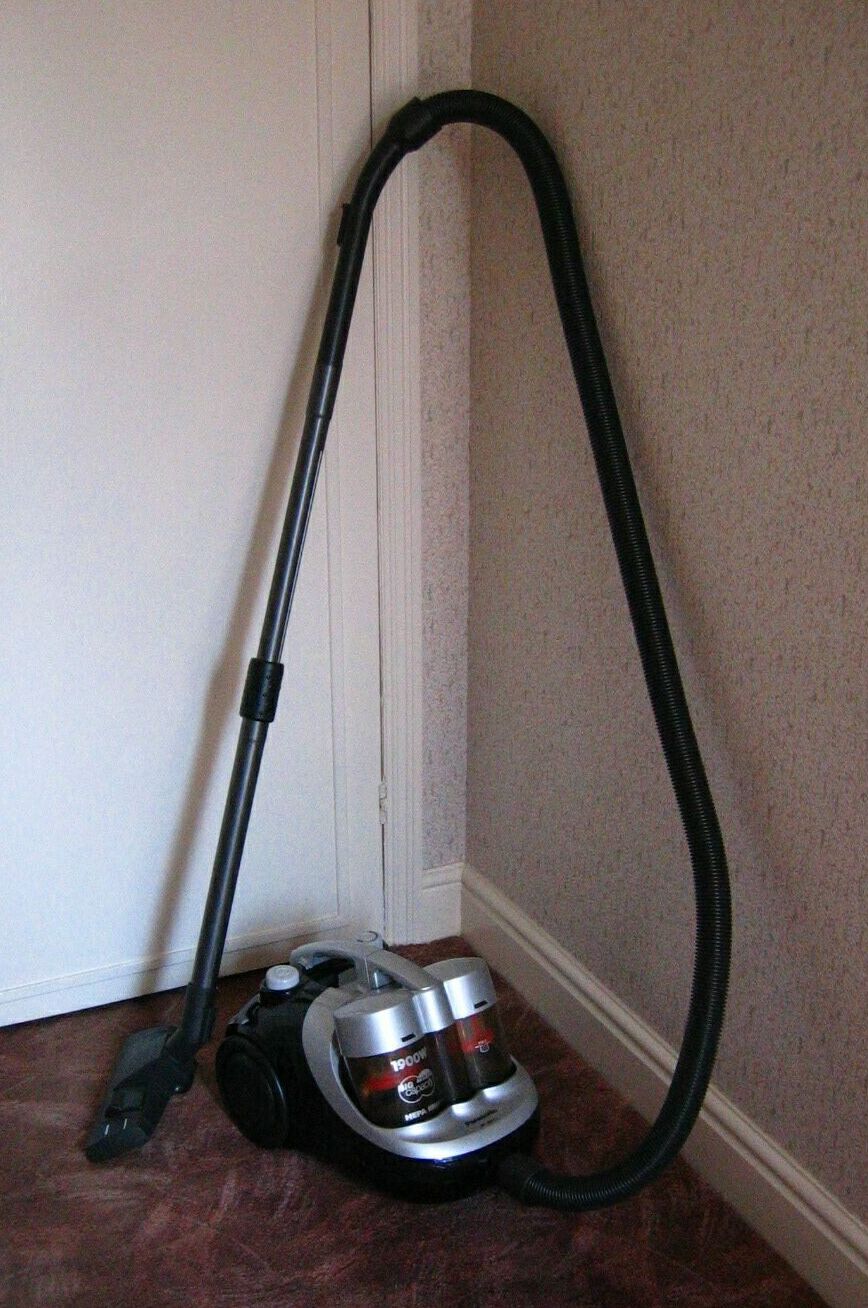
With a hose machine, hose and cable together determine reach. Do not pull the hose to move a heavy appliance. Consider whether it can sit beside stairs without blocking the route. An included upholstery tool also needs a shape that suits the place where you intend to use it, rather than merely adding to an accessory count.
Example: stairs and upholstery versus a whole room
Suppose your main tasks are a fabric sofa and a few stair treads. Hose reach, hand-tool dimensions and carrying the tank then become decisive. A broad floor brush may look impressive in a product photograph without solving those access problems. Check where the machine can stand securely while you work on upholstery with both hands.
For a whole living room, the important questions change to working in passes and the frequency of clean-water refills and dirty-water emptying. Tank volume does not directly establish finished floor area: dosing, soiling and the number of passes can differ. Treat any coverage claim together with its conditions rather than as a universal room count.
Both scenarios have limits. Some marks or materials require treatment that the appliance does not offer. Avoid assuming that extra water or repeated passes always improve the result. If a care label does not clearly permit the method, obtain suitable information from the material or furniture supplier first.
Finally define the storage arrangement. A long wet hose and loose tools must be cleaned and dried as instructed. A machine that fits a cupboard only with considerable effort becomes less appealing when the aim is to retrieve it quickly for occasional small spills.
Allow for drying afterwards
Wet cleaning leaves moisture behind. Plan ventilation and adequate time before replacing furniture or resuming heavy use. A suction claim cannot provide a fixed drying time for every material. Fibres, applied water, room temperature and air movement all matter. Avoid repeatedly soaking an area simply because an old mark remains visible.
Use the prescribed dose of a compatible solution. Extra detergent can leave residue and does not automatically improve the result. Look at the required cleaning process for hose, tool and tanks after use. Equipment that retains dirty moisture in inaccessible areas needs additional attention. Include this final cleaning stage in the purchasing decision, because it belongs to every session.