Find the route taken by the light
Blackout fabric can block light while bright strips remain visible around its edges. Separate light coming through the material from light passing around it. Inspect the top, sides and centre meeting point of the existing window treatment. Thicker fabric alone will not correct a track that is too short.
Measure the window and record where a track or pole can be mounted. Allow for projecting sills, handles and radiators. The curtains need to move freely. Follow the track system's fitting instructions and choose fixings appropriate to the actual ceiling or wall construction.
Track width is not fabric width
Curtains need additional material to hang in folds. If their combined flat width exactly matches the track, they may pull taut when closed. Check the supplier's recommended fullness or finished width. Also establish whether the pack contains one panel or a pair; that distinction changes the calculation substantially.
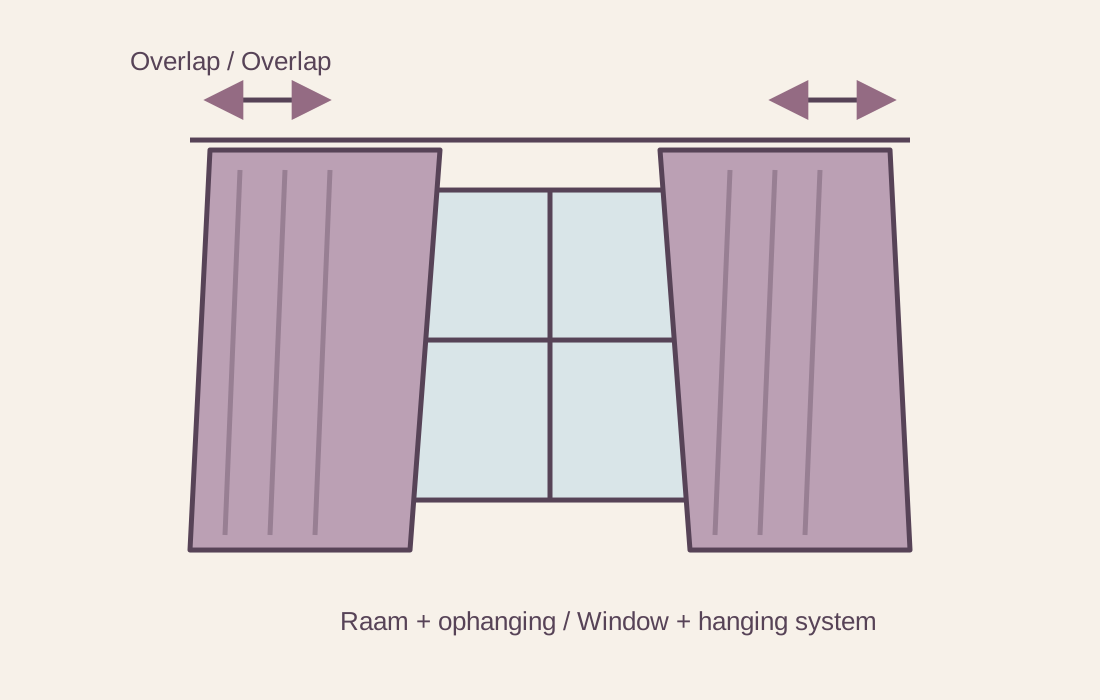
Overlap beyond the window sides helps limit a direct path for light. How much space is needed depends on the system and its distance from the wall. A wider track also lets the fabric stack farther away from the glass when open. Check whether there is genuinely space for that stack beside the window rather than assuming the fabric disappears when drawn back.
Measure from the actual hanging point
The required length does not always start at the top of the pole. Rings, hooks and tracks have different hanging points. Measure from where the fabric will actually hang to its intended lower edge. Take a measurement at both sides if the floor or ceiling is not completely level.
Read washing instructions and any shrinkage information before making a permanent hem. Fabric dragging on the floor can collect dirt and make daily movement awkward. Stopping too high may leave a strip of light. The desired finish therefore depends on maintenance and everyday use as well as darkness.
Check one window first
Where possible, hang a panel on the chosen system before altering every length. Close the curtains during daylight and inspect their edges from where you sleep or sit. A small change in hook position or overlap may help more than choosing another fabric. Treat darkness as the result of the whole installation, rather than something that the material alone can always guarantee.