The height of the airflow
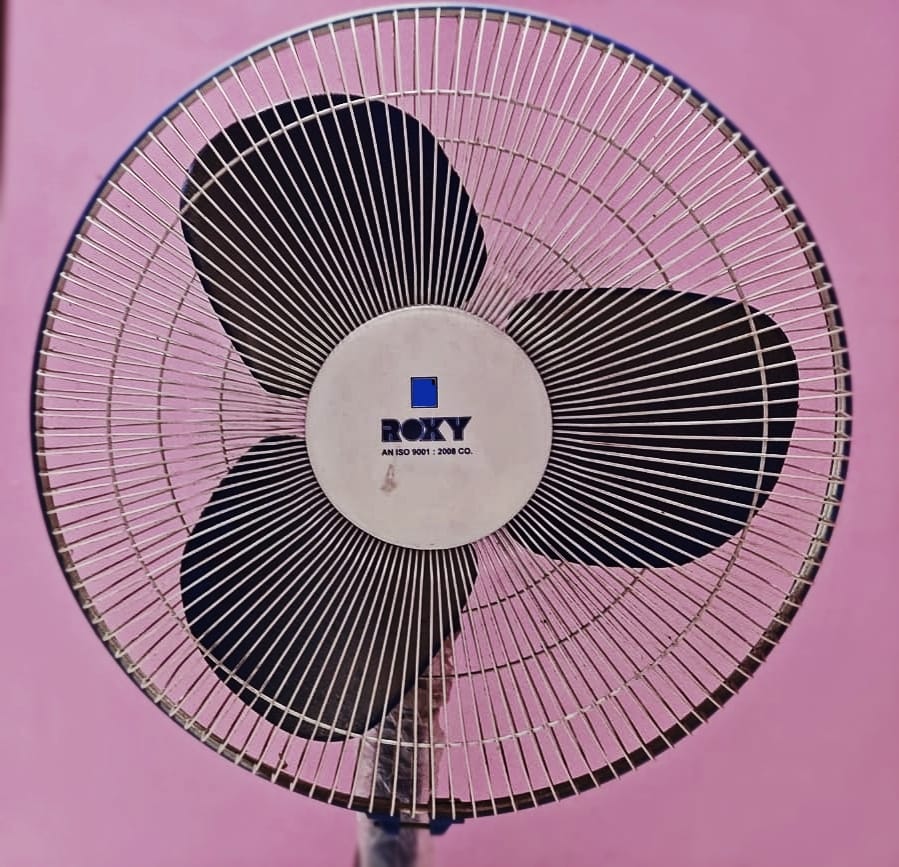
First decide where you sit or lie while the fan operates. A desk fan can direct air towards a workstation, but occupies valuable tabletop space. A pedestal model raises its head without needing furniture underneath. Check whether height is genuinely adjustable and whether its lowest setting is useful too.
A tower fan distributes air along a vertical opening. That may suit a position beside a sofa or bed, but outlet height and direction vary. Measure where the opening starts and finishes. A slim enclosure does not establish whether air will clear a tall table or blow directly against the side of a bed.
Turning and aiming
Oscillation moves the airflow across an area. Check the available angle and whether it can be limited. A broad sweep is not always useful when only one person wants airflow. Look for vertical tilt as well. A fan that turns only horizontally may be harder to aim from a low position.
Consider the base. A pedestal can have a wider footprint than the head suggests. A tower may look narrow while requiring room to oscillate. Mark an approximate outline on the floor and check that a clear walking route remains. The power lead should not cross that route or need to be stretched tightly to reach its socket.
Cleaning and operation
Find out how dust can be removed from guards and blades under the manufacturer's instructions. An enclosed tower may need a different care method from a round fan with a removable grille. Do not dismantle areas that are not intended for user access. Accessibility of the permitted cleaning points is a useful purchasing consideration.
Finally compare the lowest useful speed, controls and noise. Numerous settings help only if their differences suit your room. A fan moves air and can make you feel cooler; it is not an air conditioner actively cooling the room in the same way. Choose around airflow and positioning rather than the size or shape of the enclosure alone.