Look at the base
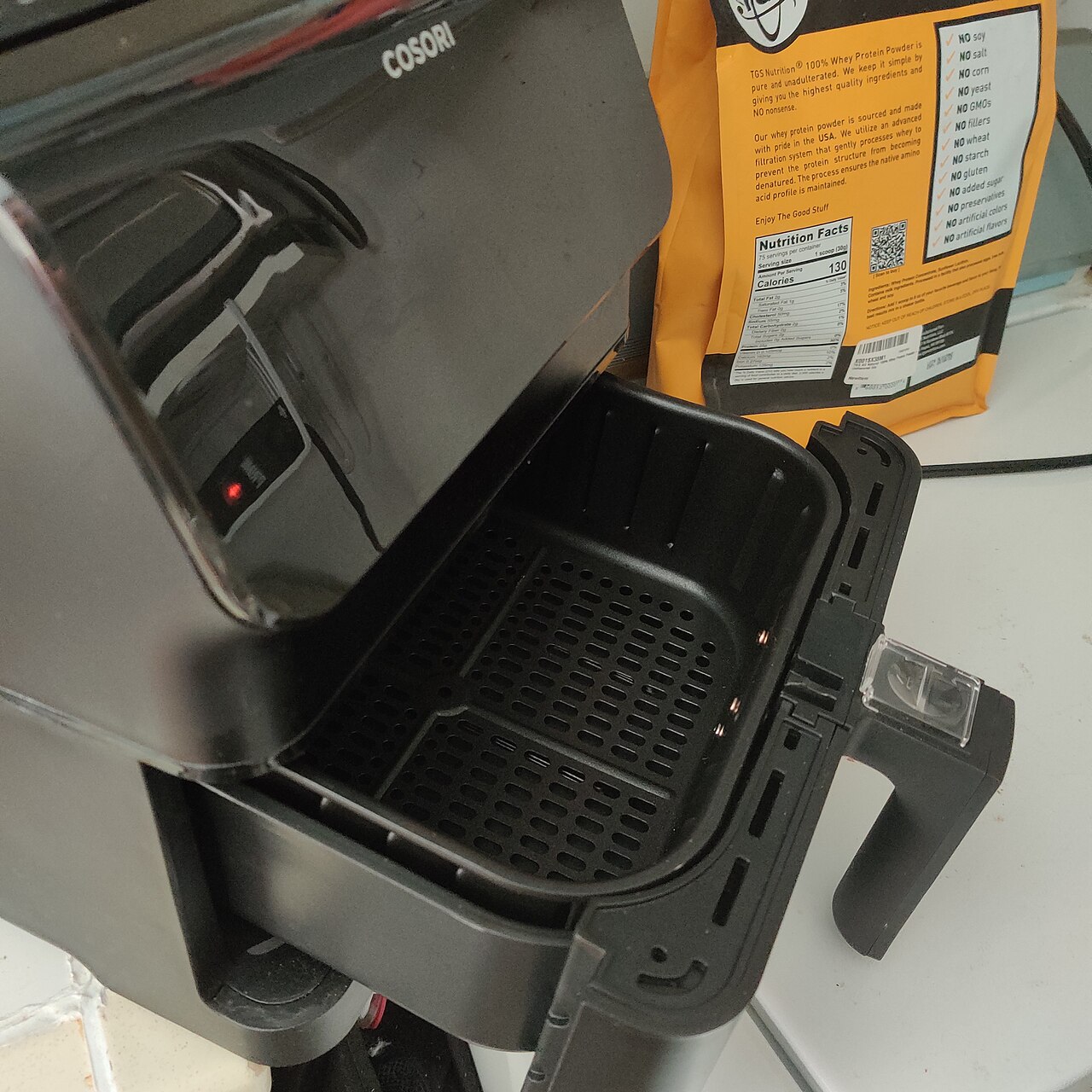
A deep basket can have a generous litre rating without offering much flat cooking area. For food you want to arrange side by side, base length and width matter. Think about pieces of fish, rolls or vegetables needing space. Compare a photograph of the removed basket with its stated internal dimensions.
Rectangular and round baskets may hold the same volume while accommodating different shapes. Measure any oven dish you intend to use and check that it is suitable for the application. Preserve the required airflow space as well; making something fit by pressing everything tightly against the walls is not a useful capacity test.
A serving is not a fixed unit
A four-person description may assume a particular food and portion size. Your meal can be composed quite differently. Decide whether the air fryer prepares a side dish or most of the meal. Space for a generous potato portion says nothing about how much room remains for vegetables afterwards.
Check maximum-fill markings and instructions for individual foods. Some preparations require shaking or turning; others need a single layer. An overcrowded large basket can therefore be less useful than its volume suggests. Use recipe guidance and appliance instructions together rather than assuming the entire cavity can always be filled to the same height.
Test the shape against a meal
Consider a meal containing two pieces of fish and a portion of vegetables. Sketch their approximate required base area on paper, without presenting this as a cooking test. Compare the outline with the usable basket floor. If ingredients fit only when stacked but the method requires one layer, litre capacity is not the relevant advantage.
Another example is food cooked in a separate dish. Measure that vessel's outside dimensions, including handles, and confirm its suitability under the instructions. Allow for removal too. A dish that just slips into the basket when cold may be difficult to handle safely when hot. Avoid a size that leaves you dependent on improvised tools to obtain a grip.
Then decide whether cooking in two batches is acceptable. That may be fine for a side dish during relaxed preparation, while a household wanting to eat together faces a different schedule. This is a preference, not automatically a defect in the smaller appliance. Include heating, turning where required and reloading when considering the actual process.
This exercise prevents reliance on the serving count printed on a box. It identifies the shapes and quantities that matter and which additional space you would genuinely use rather than simply admire in a specification table.
Counter and washing-up space
A wide basket needs room to slide out and be set down safely. Measure not only the closed appliance but its forward opening movement. Allow for heat, specified wall clearances and a suitable surface for hot components. A convenient storage footprint is not necessarily an adequate operating footprint.
Then check whether the basket fits your sink or dishwasher, where machine washing is permitted. A large appliance can introduce extra daily work if its main component fits neither comfortably. Choose a size that handles your ordinary meal without unsuitable overloading while remaining easy to operate and clean. A bigger litre figure alone is not evidence of a better match.