Write down one familiar recipe
Take a recipe you make regularly and record its quantities. For bread, distinguishing flour weight from total dough weight is particularly important. Batter combines ingredients and volumes differently. Compare these details with the exact model's capacity instructions. A large bowl volume does not automatically establish how much heavy dough the drive can process.
Consider the smallest quantity you often prepare too. A large bowl can be awkward for a little cream or one egg white if the attachment cannot engage it properly. Look for guidance on small batches and compatible smaller bowls. Accessories are not necessarily interchangeable between every mixer size or mounting arrangement.
Shape and movement
Bowl diameter and depth affect ingredient addition and access to the sides. A wide bowl can be easy to see into; a deep bowl may contain splashes but be less accessible. Assess this alongside head movement and the working height available in your kitchen.
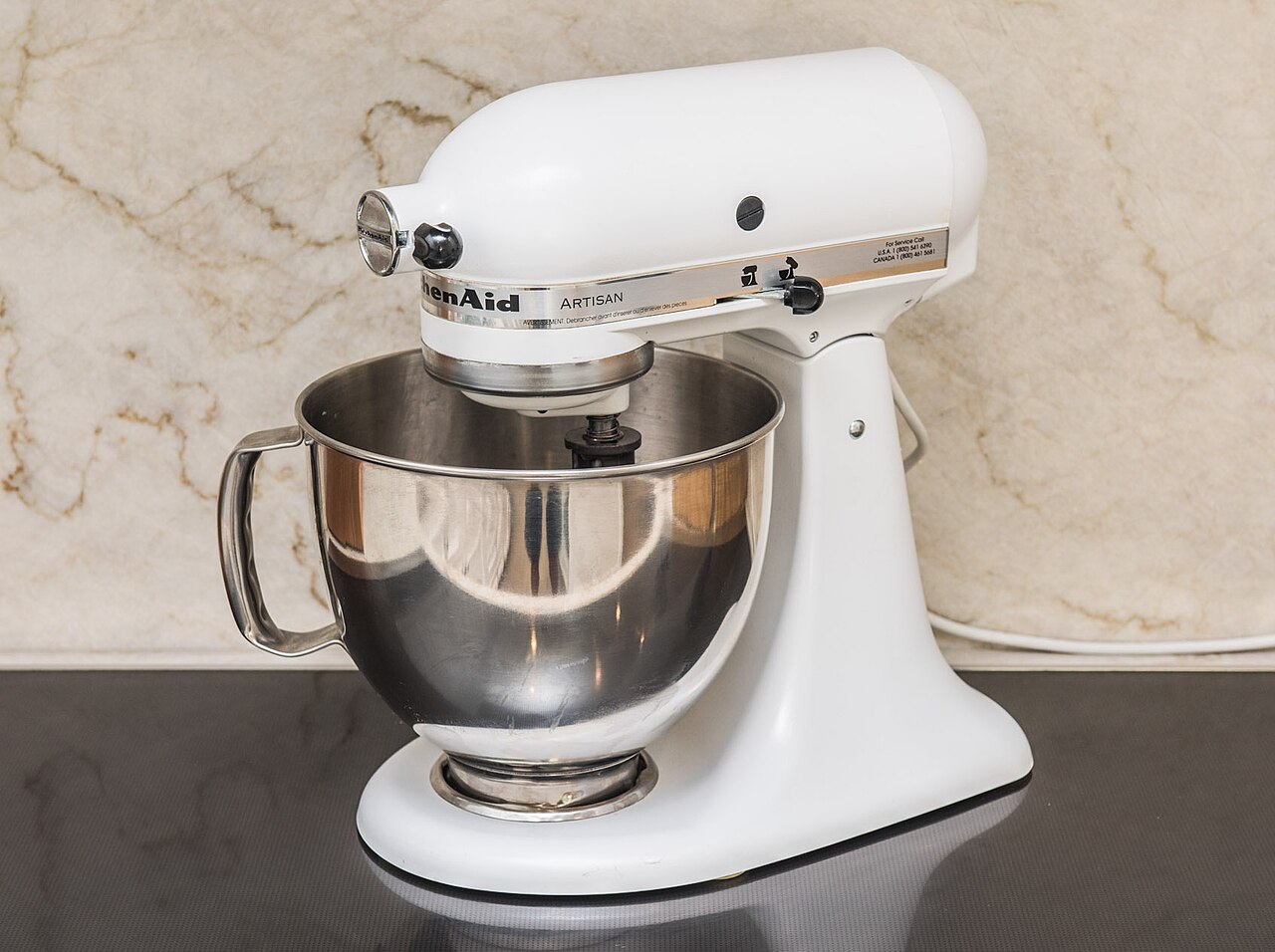
A tilt-head design needs space above and behind the machine. A bowl-lift arrangement changes how the bowl attaches and comes away. Neither is automatically easier for everyone. Try the latch and handle if possible, remembering that the bowl becomes heavier during use than the empty display model. Check that you can remove it without awkwardly reaching around nearby equipment.
A second bowl does not change the drive limit
An additional bowl can help when preparing two parts of a recipe consecutively. Ingredients can be organised without immediately emptying the first bowl. Check that the bowl and every attachment used are approved for the same machine. An almost-fitting mount is not an appropriate basis for operating a heavy mixing vessel.
A larger accessory bowl does not automatically raise the motor's permitted dough load. Respect appliance and tool limits even when empty space remains visible. A second bowl mainly helps preparation and cleanup. Record that distinction when comparing packages so an extra accessory is not mistakenly counted as greater mixing capacity.
Large batches also create washing up
Measure whether the bowl fits the sink and check its permitted cleaning method. A dishwasher-safe bowl may still occupy substantial rack space. Establish whether whisk, hook and beater tolerate the same treatment. An attachment's finish may have different care instructions from the bowl itself.
Do not choose entirely around occasional doubled recipes. Two permitted smaller batches can sometimes fit your routine better than using an oversized arrangement every day. Conversely, greater capacity makes sense when normal preparation genuinely requires it. Respect the appliance's limits and compare it against your usual recipe, handling needs and cleaning space.