Start at the device end
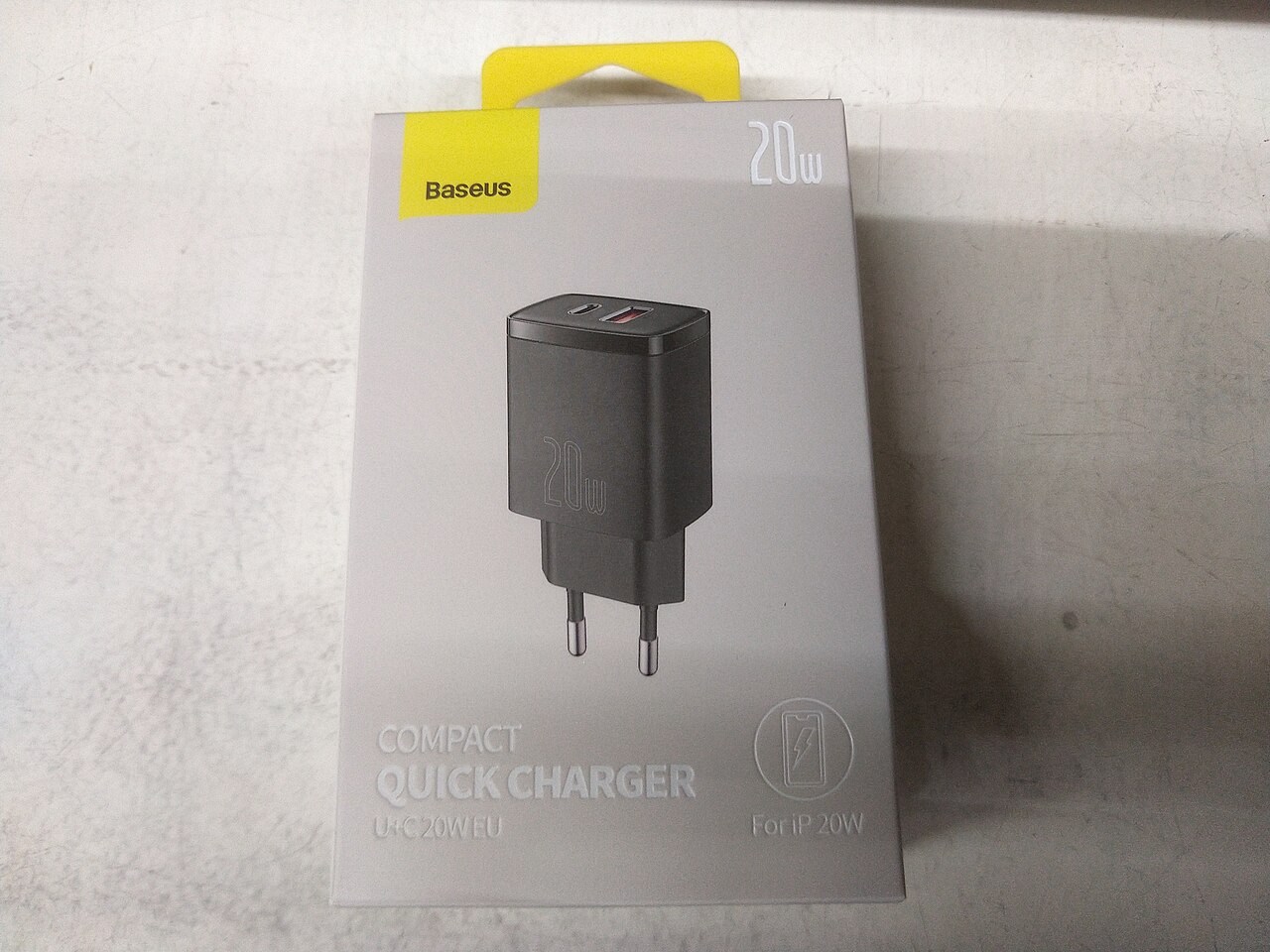
Find the charging requirements for your phone, tablet or laptop in its official documentation. The wattage printed prominently on a charger is only a starting point. The device and charger must support a suitable charging method and output profile, and the cable must also be appropriate. A large total number does not guarantee that every connected device receives its preferred power.
For a laptop, distinguish between charging while idle and supplying enough power during demanding use. If the manufacturer lists a recommended adapter, compare its requirements with the proposed replacement. A charger that slowly adds charge overnight may not be suitable as the only power source during a working day.
Read the multi-port table
Look for the allocation of power when several ports are used together. A port advertised at a high maximum may deliver less once another device is connected. The relevant comparison is your actual combination, such as a laptop and phone, rather than the best single-port figure. Check whether the table distinguishes USB-A and USB-C outputs.
Connecting or removing another device can cause some chargers to renegotiate their outputs. If an uninterrupted connection matters, read the model documentation and test your intended arrangement before relying on it. Do not assume that adding more sockets creates more total available power.
Include cables and placement
A charger may be sold without the cable needed for its headline capability. Check both ends, power rating and length. A cable suitable for charging is not automatically suitable for fast data transfer or video; those are separate specifications. Keep the original device requirements beside you while comparing bundles.
Measure the charger against the socket or extension strip where it will live. A wide body can block an adjacent outlet, while a heavy wall unit may be awkward in a loose or poorly positioned socket. Use equipment in sound condition and follow the manufacturer's ventilation guidance rather than covering a charger beneath bedding or papers.
Work through a two-device example
Imagine a hypothetical charger labelled 65 W whose table gives 65 W from one USB-C port alone, but 45 W plus 20 W when both ports are used. A laptop requiring the full 65 W does not receive that merely because the total on the box remains 65 W. The second device changes the available allocation. These numbers illustrate how to read a table; they are not specifications for a recommended product.
Now suppose the phone accepts less than the second port can provide. Do not automatically assume the unused amount moves back to the laptop. Redistribution depends on the charger design and its documented combinations. The useful evidence is the output table, not an arithmetic guess based on the devices connected.
Make a small comparison with three columns: laptop alone, phone alone and both together. Add the cable rating and the charger mode needed for each. If an important cell is blank in the product documentation, ask for clarification. This method also exposes a bundle that includes a powerful charger but an unsuitable cable. It turns the shopping decision into a check of actual arrangements rather than a contest between headline wattages.
Buy the configuration, not the largest number
For travel, verify the input voltage range and plug arrangement for the destination. A physical travel adapter does not itself convert every electrical characteristic. Check what the complete product is approved to do. At home, a smaller charger with clear output information can be easier to use than a more powerful one whose shared-port behaviour is undocumented.
Keep the model number and output table with your purchase information. They make it easier to choose a replacement cable or diagnose a slow charge later. The useful question is whether your devices receive the power they need in the combination you actually use.