Where will the heat go?
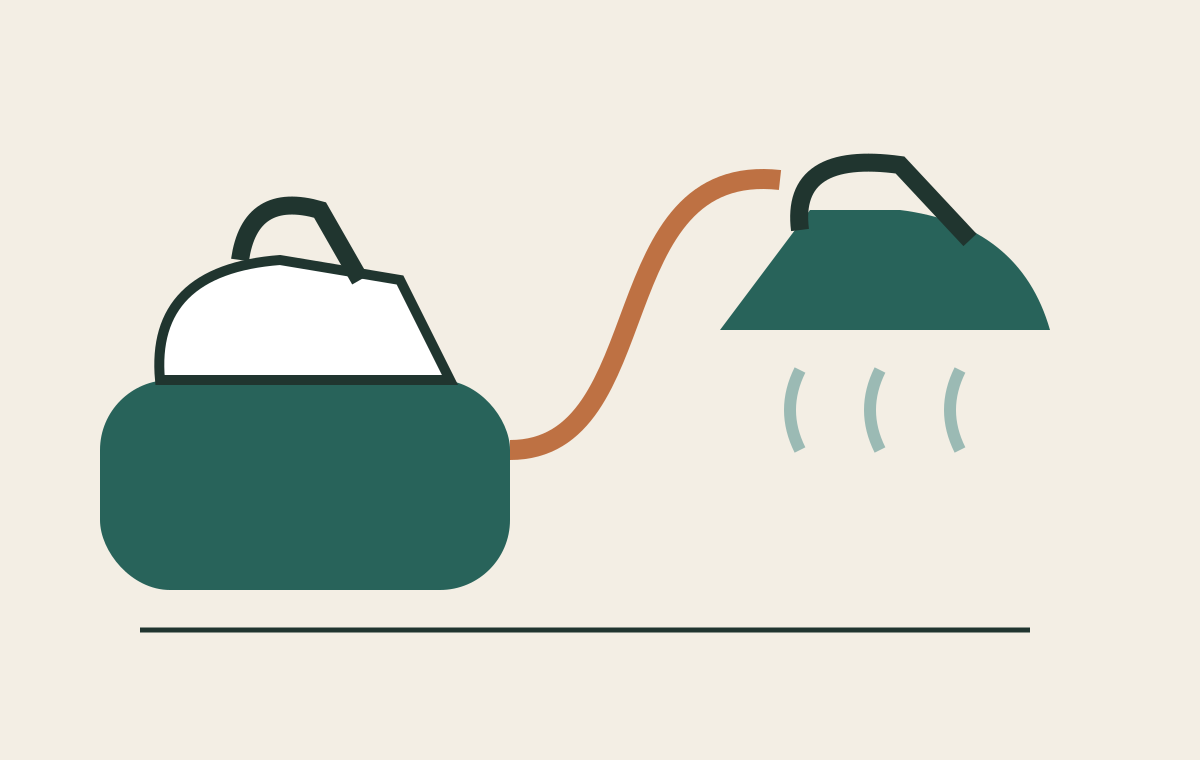
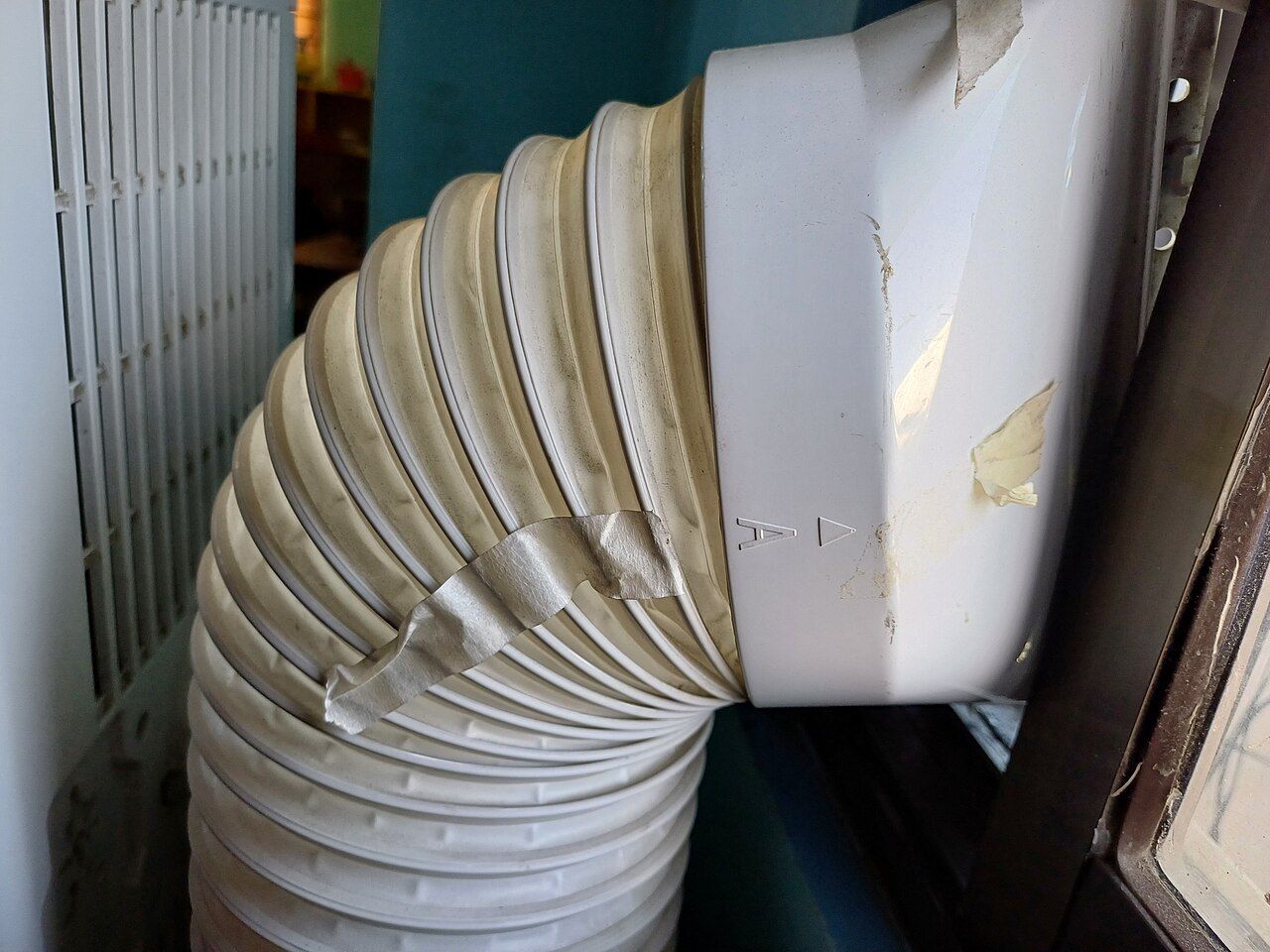
A portable air conditioner needs to discharge heat outdoors. A common arrangement uses an exhaust hose through a window opening. Placing the unit in a room while leaving the hose blowing indoors is not a normal cooling setup. First establish which window or approved outlet can actually be used.
Window kits are not universal. A kit for a sliding window can work differently from a seal for a tilt-and-turn opening. Measure the opening and compare it with the supplied components. A photograph of a suitable window on a product page does not prove that your frame has the same shape or dimensions.
The hose determines the position
Follow the specified hose-length and bend requirements. An improvised long extension can obstruct exhaust. Position the appliance within the permitted distance and ensure furniture cannot flatten the hose. Check that inlet and outlet clearances remain available once the unit is in its intended place, rather than measuring the cabinet in isolation.
The appliance also needs an appropriate electrical connection. Read the instructions rather than designing the setup around an arbitrary extension lead. Consider how the window will be secured during operation and what happens in rain. A rented property or shared exterior may require agreement before making a permanent opening.
Check a complete window arrangement
Draw the window in the position it must occupy during operation. With an inward-opening frame, the sash may take space you expected to use for the hose. A seal must suit both that movement and the frame. Check whether the window can still be closed or secured appropriately once the appliance is switched off.
Ask which components are included. A connector, hose and adapter may appear in illustrations without every part of a particular sealing solution being supplied. Record additional components before comparing prices. An inexpensive appliance lacking a compatible window arrangement can still become an unusable combination for your room.
Consider people's route through the space as well. A hose across a low passage or a unit in front of a door creates daily inconvenience. Mark the footprint on the floor with removable tape, including the required clearances. This reveals whether furniture must move and whether the unit can genuinely remain in place during operation.
For storage, check how water is removed and how the appliance should be transported. A storage location on another floor requires carrying; castors do not help on stairs. This preparation does not predict cooling performance, but it prevents choosing equipment whose necessary installation cannot be accommodated in the room.
Condensate and everyday access
Establish how the model handles collected moisture. Some operating conditions require a tank to be emptied or a drain connected. A description mentioning evaporation does not automatically mean water will never need attention. Read the instructions separately for cooling, dehumidifying and preparing the unit for storage.
Finally measure room for moving the appliance and reaching its filters. Castors do not make a heavy unit easy to carry upstairs. Portable mainly means that a fixed indoor unit is unnecessary; it does not remove installation requirements. Before buying, draw the complete arrangement of cabinet, hose, window and power point. If that route is unsuitable, greater cooling capacity will not solve the installation problem.