Freestanding does not mean built-in
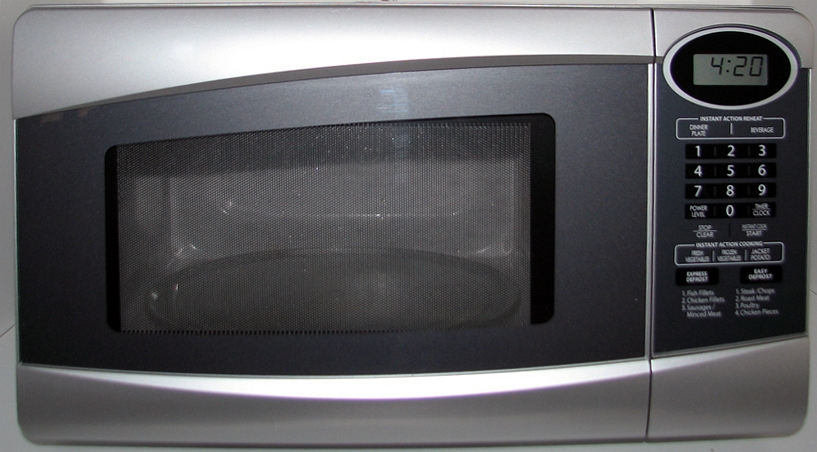
First establish whether the microwave is intended to stand freely or use a specific built-in arrangement. Sliding a freestanding model into a closely fitting cabinet can obstruct airflow. Use only an approved installation and, where relevant, the matching trim or installation kit for the exact appliance.
Read the installation drawing for required space above, behind and beside the unit. Clearances differ between designs; do not borrow a universal figure from another model. Allow for projecting plugs and cable routing too. The housing may fit while its electrical connection is pressed against the rear wall, making the apparent fit misleading.
An open door and a hot dish
Consider the door's swing and whether it can open fully. A wall beside the hinge may restrict the useful opening. You need to remove a dish with both hands without negotiating a sharp cupboard edge. A drop-down door requires a different space arrangement from a side-hinged one.
Installation height matters as well. Removing hot liquid from above shoulder height can be awkward and hazardous. Choose a level where you can see the contents and support the dish steadily. Reserve a suitable nearby landing surface; you should not need to clear the counter while already holding something hot.
Draw the working area beside the installation diagram
On the floor plan, draw the user and dish as well as the microwave. In a narrow kitchen, an open door may occupy precisely the place where you need to stand. A shelf of sufficient depth does not then guarantee comfortable access to food. Rehearse the movement with an empty dish and an imagined door before installing a permanent shelf.
Assess the controls at the proposed height. Small lettering can become difficult to read when the display is far above or below eye level. A rotary knob needs hand clearance, while the door control should remain reachable without stretching across a hot dish. These are everyday operating details rather than optional luxuries.
Combination appliances can have additional requirements for their other functions. The space and accessories suitable for microwave-only operation do not automatically describe oven or grill use. Read instructions for each mode and establish which vessels, racks and heat-resistant surroundings are required. Use a metal accessory only in the way specifically permitted.
Before ordering, check the exact product code against the installation drawing. A related version may use a different door, enclosure or ventilation route. That final comparison prevents carefully measured space from being judged against the wrong drawing, which would undermine the earlier work even though the headline dimensions appeared familiar.
Assess inside and outside separately
Check that your normal plate or dish fits the cavity. With a turntable, allow room for movement rather than only the stationary plate. A flatbed design changes that consideration, but vessel and positioning instructions still apply. Litre capacity alone does not establish whether a broad rectangular dish will be usable.
Finally inspect ventilation openings and cleaning access. Do not store objects on top where instructions prohibit it or where heat discharge would be obstructed. Keep the installation drawing alongside your measurements. A suitable microwave fits both as an object and in operation: with clear air paths, an open door and room for the food containers you actually intend to use.