Start with the filter basket
Establish which basket your espresso machine uses. A pressurised basket makes different demands on the grind from a conventional single-wall basket. Read the machine's guidance before concluding that any coffee grinder offers the required range. The word espresso on a box does not explain precisely how fine or accurately adjustable its output is.
With a conventional basket, a small grind change can noticeably affect flow. Look beyond the finest setting to the spacing between useful adjustments. A grinder may reach a sufficiently fine texture while still making large jumps between the two positions you need for a particular coffee.
Adjust without losing your place
A clear scale helps you return to an earlier setting. Ask whether adjustment should occur while stopped or while running; mechanisms differ. Do not force an adjustment ring. When experimenting, record the amount of coffee as well, so you are not changing several variables at the same time and losing track of which change affected the result.
If you alternate between espresso and filter brewing, returning to settings deserves extra attention. Retained grounds can affect the first dose after a change. Check how the maker describes emptying and cleaning the mechanism. A design that works comfortably for one fixed method may not be the most convenient for several daily changes.
Compare without inventing a taste score
You can assess a grinder meaningfully without claiming that its coffee tastes better. Start with reproducibility of adjustment. Can you return clearly to a position, read the scale and keep the selected setting during ordinary operation? These are observable control characteristics. A taste claim would require an actual comparative trial with described conditions.
Then work through your daily dose. With a hopper arrangement, beans may remain above the mechanism; with single dosing, a small measured quantity is added each time. Consider how you intend to manage retained grounds and follow permitted cleaning methods. Do not make unapproved tapping, blowing or dismantling part of a routine designed to extract every last particle.
A second user may have different requirements. If one person brews filter coffee and another espresso, recording separate settings helps. Assess whether switching is sufficiently straightforward. Two independently adjusted tools can sometimes make more sense than repeatedly moving one mechanism across a wide range, although that obviously requires more space and a different budget.
Use these questions to identify the relevant product documentation. You are then comparing range, controls and workflow without depending on a marketing phrase or an unsupported ranking, and without confusing a convenient adjustment system with proof of superior flavour.
Delivering the dose
Some grinders operate for a selected time; others let you feed in a preweighed quantity of beans. A timer is not a direct weight measurement. Beans and settings can alter how much coffee emerges during the same interval. A scale can make your own process easier to check without requiring a complicated automatic function.
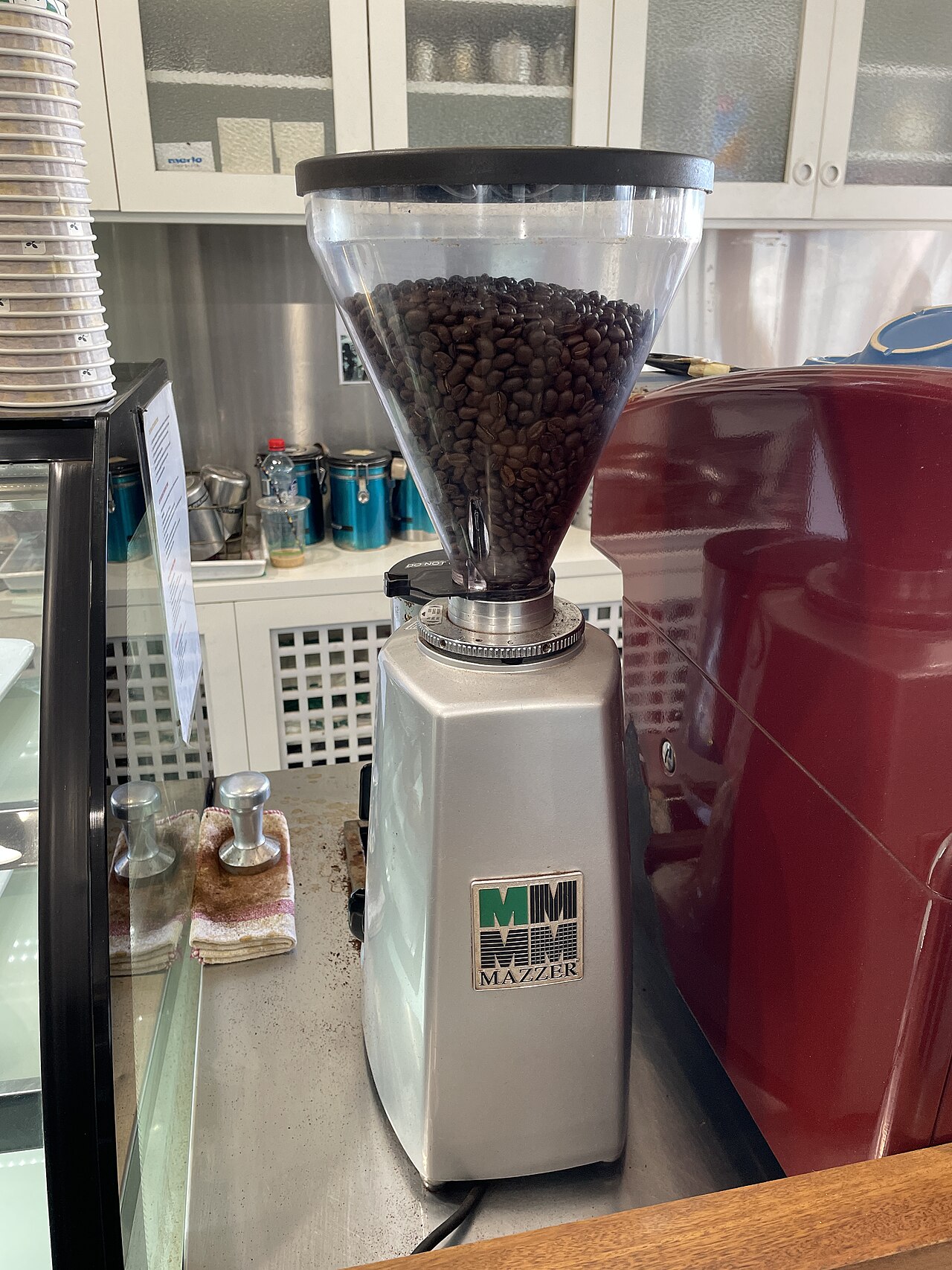
Inspect the receiving arrangement too: does the portafilter fit, do grounds remain inside its rim, and can the outlet be kept clean? Allow overhead space beneath kitchen cupboards when beans are loaded from above. Choosing a grinder therefore also means choosing an adjustment, dosing and maintenance routine. Compare those three tasks around your actual machine rather than counting grind settings alone.