Measure the rack while it is open
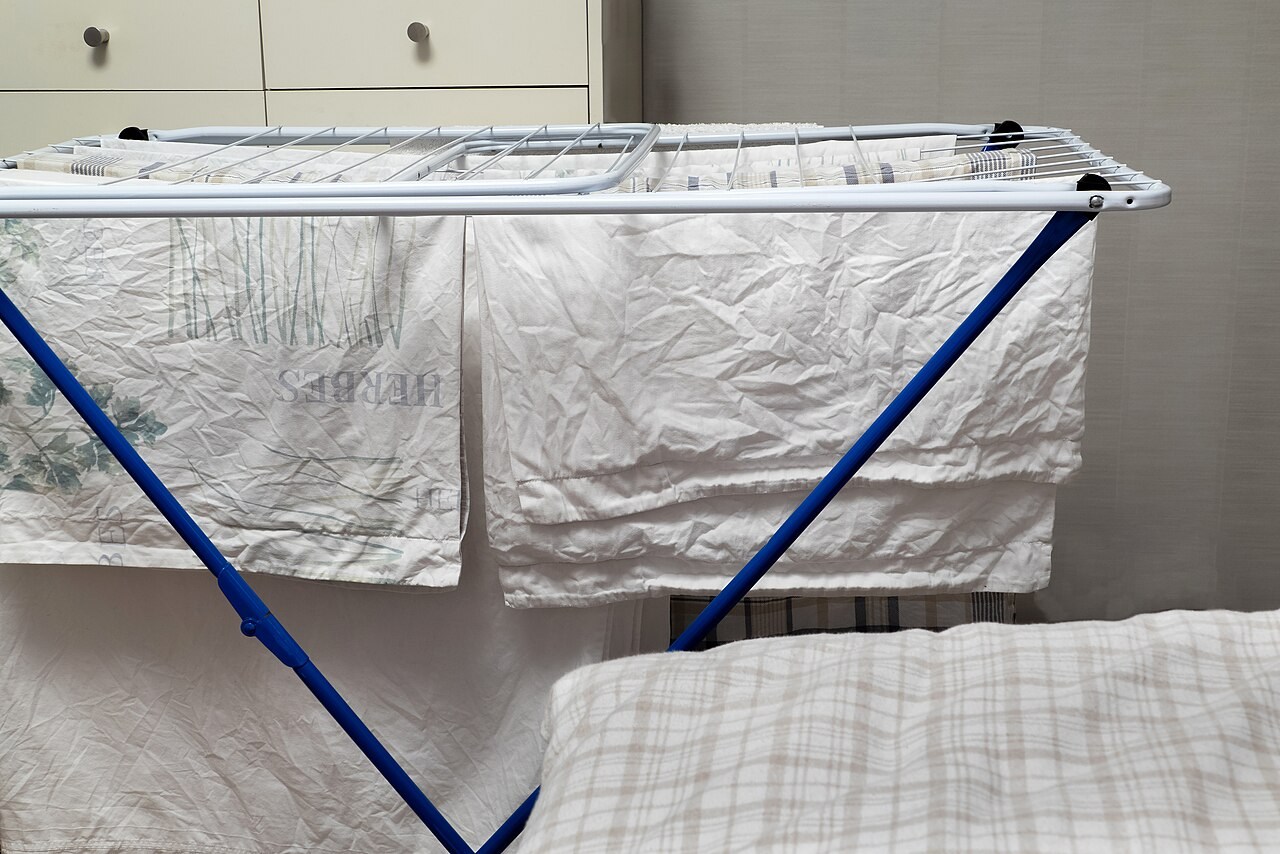
The folded dimensions tell you whether a rack fits behind a door, not whether you can use it in the room. Mark the opened footprint on the floor, including wings or extensions. Leave enough room to walk around it and open nearby doors. A rack that technically fits can still block the route you use every day.
Check the height of hanging rails against your longest usual items. Trousers, dresses and towels need different clearance. Folding everything over a low rail can change how much useful space you have. Compare the clothes you actually wash rather than choosing solely from the total metres of line advertised.
Spacing matters alongside line length
A large number of closely packed rails does not mean every rail can hold bulky wet fabric with generous space around it. Look at the gaps and whether wings can be adjusted. If you often dry shirts on hangers, check that there are suitable places for them and that their length will clear the floor.
Flat drying needs a supported surface appropriate for the garment. Do not assume stretching a delicate item across a few narrow bars follows its care instructions. Consider whether you need a separate accessory and include its storage space in the decision.
Think about the loaded structure
Read the load limit and distribute washing as instructed. A rack should stand on a suitable stable surface, with its locking mechanisms engaged. Do not use a light folding rack as a support for other objects or move a heavily loaded one in a way the manufacturer advises against.
If the product is intended for outdoor use, check its material and storage guidance rather than assuming a metal finish means it can remain outside indefinitely. Wind and uneven ground create different conditions from an indoor floor. Choose a location that suits the product and does not obstruct access.
Give moisture somewhere to go
Indoor drying adds moisture to the room. Use an appropriate ventilated location and follow your home's ventilation arrangements. A compact rack does not remove the need for space around wet clothes. Avoid positioning it where damp fabric contacts walls, furniture or electrical equipment.
Finally, fold and unfold the model if a demonstration is available. Check where fingers go, whether legs lock and how it is carried. The best dimensions are the ones that work both during a full wash and after the rack is put away. A smaller, accessible rack may get used more effectively than a large model that is troublesome to open in the available space.