Describe the room first
Measure the room and record how it is used. A heated bedroom with occasional condensation has a different moisture load from a utility room where laundry dries daily. Note whether doors normally remain open. An appliance in one room may then be treating air from a larger adjoining area as well.
Moisture can have a cause that a dehumidifier does not resolve, such as a leak or inadequate removal of humid air. Investigate visible damage and recurring damp patches before treating the appliance as the answer. Collecting water does not, by itself, explain why that moisture is entering or remaining in the space.
Read the capacity conditions
A litres-per-day figure is measured under particular temperature and humidity conditions. Do not compare products as though that figure will be achieved in every room. Find the test conditions and permitted operating-temperature range. A cold store room presents different demands from a normal living space; establish that the proposed system is intended for that location.
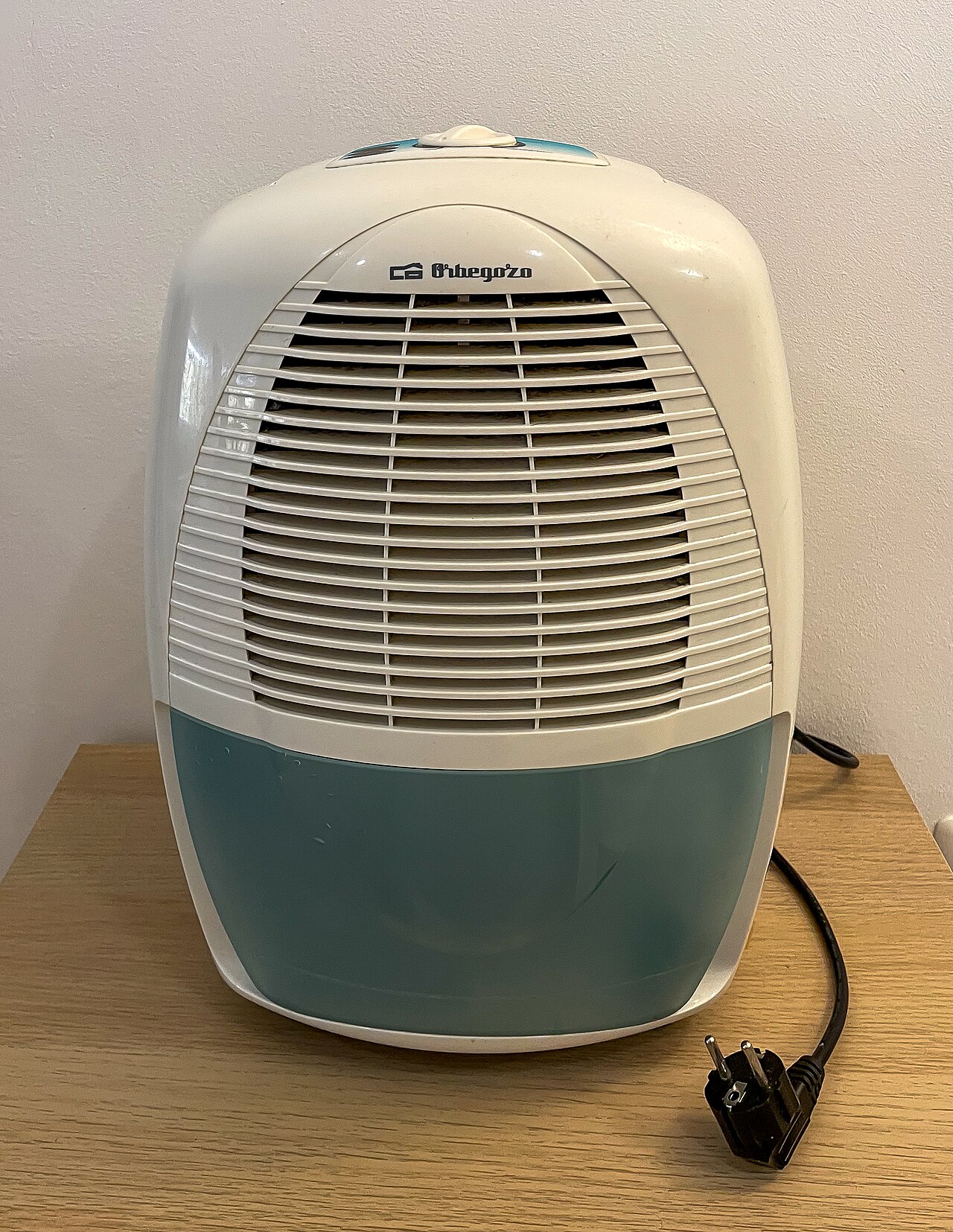
Look at the air inlet and outlet arrangement. A corner behind a sofa may seem convenient while restricting airflow. Observe the specified clearances. Also check whether the water container slides out at the front, rear or side, and whether that movement remains possible in your intended position.
Observe when moisture appears
One humidity reading says less than a pattern across several ordinary days. Note when you cook, shower or dry laundry and when the room feels damp. Use a meter according to its instructions and avoid positioning it directly in an air outlet. The aim is to see relationships, not to diagnose the building from a single number.
Also consider whether the problem occurs only in cold weather or follows a particular activity. This can help you ask clearer questions of a landlord, installer or other appropriate professional. A dehumidifier can remove moisture from air, but a damaged pipe or continuing water ingress needs its own response. Keep the cause in view even when the tank fills quickly.
For the purchase, define two operating scenarios. One might be everyday use in an occupied room, where sound and controls matter strongly. Another could be a temporary heavier task in a suitable space where you spend less time. Check whether one candidate can accommodate both within its instructions. This gives a noise figure or tank size a concrete role instead of treating it as merely another ranking number.
Everyday handling matters
A larger tank can reduce emptying frequency but becomes heavier when full. Examine its handle, pouring edge and the full-tank shutoff arrangement. Continuous drainage requires a suitable route to a drain. Having a hose connection does not automatically make that route possible in the room where you want to use the appliance.
Finally compare controls and noise at the setting you expect to select. A quiet minimum setting is not equivalent to maximum extraction capacity. Consider whether you will occupy the room during operation and whether the humidity target is clearly adjustable. Choose around space, temperature, moisture source and maintenance together. One large capacity number cannot replace that assessment.