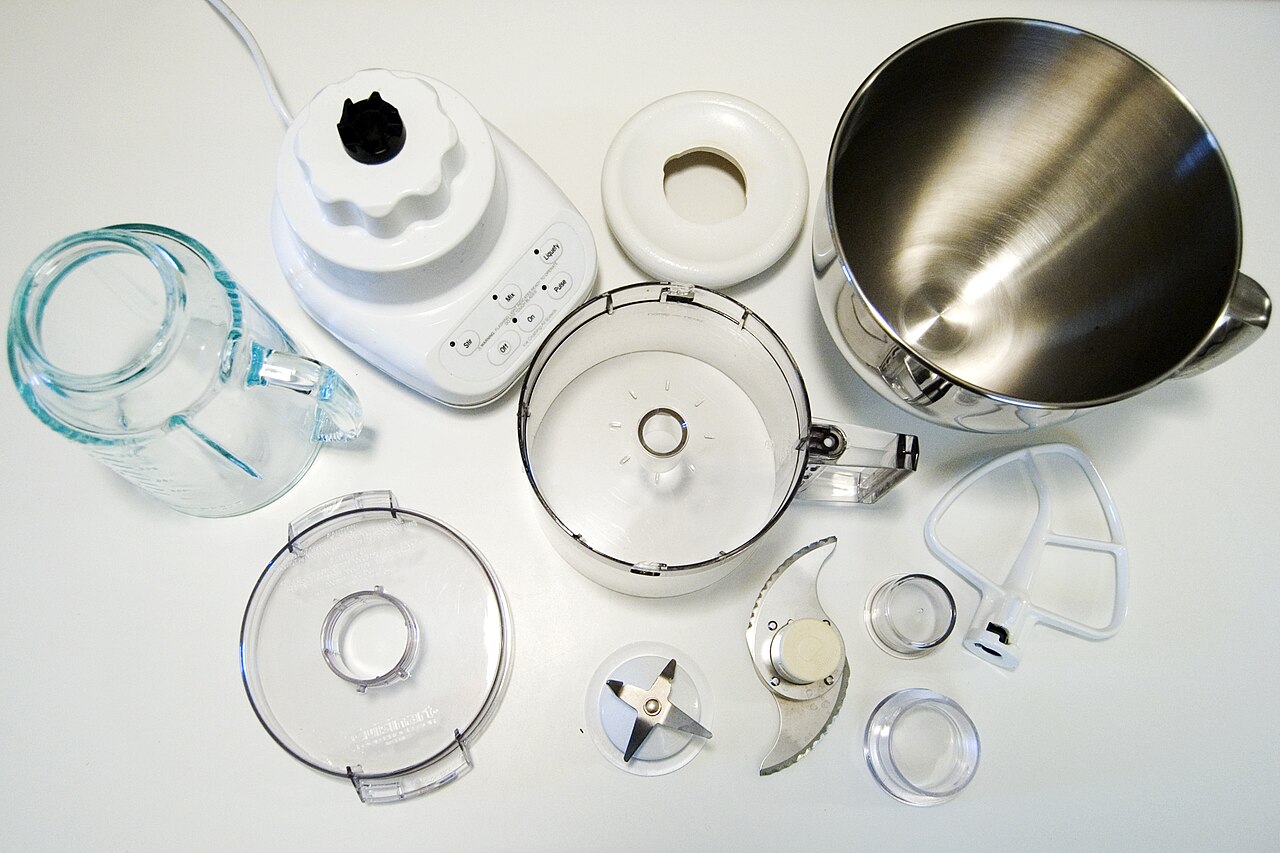
What goes into the jug?
Distinguish cold smoothies, thick mixtures and hot soup. Not every blender vessel is intended for all three. Find permitted ingredients, temperature limits and fill levels in the instructions. The general capacity figure may exceed the amount that can safely be processed during a particular preparation.
A personal blender with a sealed cup is not automatically suitable for hot liquids. Heat and pressure require an appropriate design and method. Follow the exact appliance's directions and cool ingredients where instructed. Do not copy a method from another model merely because the blades look similar or both products are described as blenders.
Material and weight
Glass and plastic have different properties, but the material name alone does not settle the choice. Consider weight, handle shape and your usual batch. A heavy glass jug filled with food can be awkward to pour. A lightweight vessel may need different care concerning scratching or discolouration, depending on its material and use.
Check that measurement markings remain legible and the lid is straightforward to fit. With small portions, ingredients need to reach the blades as intended. A large jug is therefore not automatically ideal for one small sauce. Look for minimum quantities and permitted accessories for that task rather than assuming any amount can be processed equally well.
A small sauce and a large smoothie
Suppose you usually make one smoothie but occasionally prepare soup for several people. A large jug appears capable of covering both, yet its minimum working quantity still matters. With little food present, the mixture may circulate around the blades differently from a fuller batch. A compatible small vessel can help if approved for the recipe and appliance.
For thick sauce, being able to stop and scrape the sides safely matters. Use a tamper only when it belongs to the system and is permitted under the instructions. Putting an ordinary spoon through an open lid while blades turn is not a substitute. Compare the actions during blending rather than only the finished result shown in a photograph.
With a large quantity, pouring becomes the next task. Check finger space around the handle and whether the lid needs holding during pouring. That may be straightforward with a cold drink but require different care with warm contents. A supporting hand needs an appropriate place, not a sharp or hot component.
This compares three distinct moments: beginning a small preparation, managing a thick mixture and pouring a substantial portion. One capacity figure does not fully describe any of them, so handling demonstrations and the specific instruction table can be more useful than choosing solely by maximum volume.
Cleaning with access to blades
Establish whether blades are fixed or removable under the instructions. A detachable blade assembly can require different cleaning steps from a sealed base. Avoid unnecessary contact with sharp parts and follow the prescribed dismantling sequence. Check dishwasher suitability component by component; a washable lid does not establish that the entire jug can receive the same treatment.
Finally measure storage space and the clearance needed to place the jug on its motor base. A tall blender beneath an overhead cupboard may be awkward to fill. Choose around your normal recipes, quantities and temperature use. The largest litre figure says little about how well a small everyday preparation works inside it.