The largest number of settings says little
A trimmer with many settings may mainly offer tiny differences within a range you never use. Write down the lengths you need first. Short stubble calls for different increments from a longer beard. Check the stated millimetres rather than only numbers on a dial; a number can identify a setting rather than directly state a length.
Then establish which comb provides that range. Some devices use several fixed combs, others an adjustable comb or separate attachments for shorter and longer lengths. An advertised overall range does not necessarily mean you can move through every length without changing components.
The comb should stay predictably in place
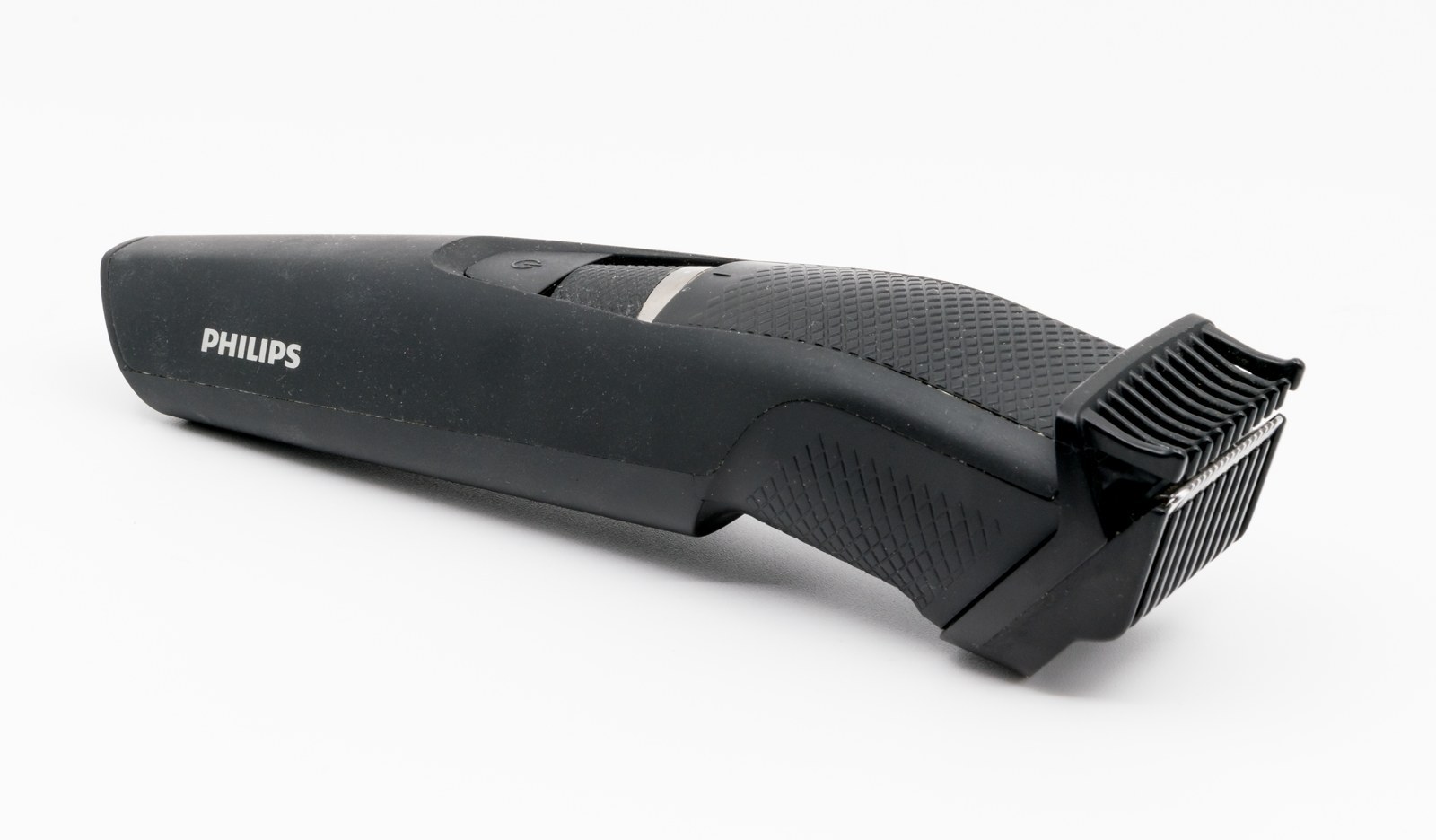
Inspect how the comb attaches and how a setting is secured. A clear click or lock helps you find the same position again. Notice whether your grip presses the adjustment control. A loose or damaged comb should not be held in place by applying extra pressure during use.
With an adjustable cutting element, the final setup may depend on more than one control. Read the table for your model. Philips documentation, for example, describes click-on combs, sliding controls and wheels. The operating logic therefore needs checking on the actual device rather than assuming all systems behave alike.
Edges and larger areas
A broad cutting head can cover larger areas, while a narrow detail attachment gives more visibility around edges. Check whether that attachment is included or merely available separately. A large kit may contain many components, but unused pieces mainly create more objects to store.
Also establish the difference between trimming with and without a comb. Removing it can produce a much shorter result; do not assume the same numbered setting still applies. Follow the intended-area instructions and do not use damaged cutting components. Product versatility should not be inferred from appearance alone.
Maintenance and repeatability
Find out which parts can be rinsed and whether lubrication is required; constructions differ. A tray that keeps combs in order may be more helpful than a pouch where small pieces become mixed together. Record the comb and setting when a length works for you.
Finally, include charging time and replacement-comb availability. A broken comb need not make the whole device unusable if the correct part is obtainable. Search using the exact model number. This judges the trimmer by repeatable settings and maintenance rather than simply the quantity of accessories in its box.