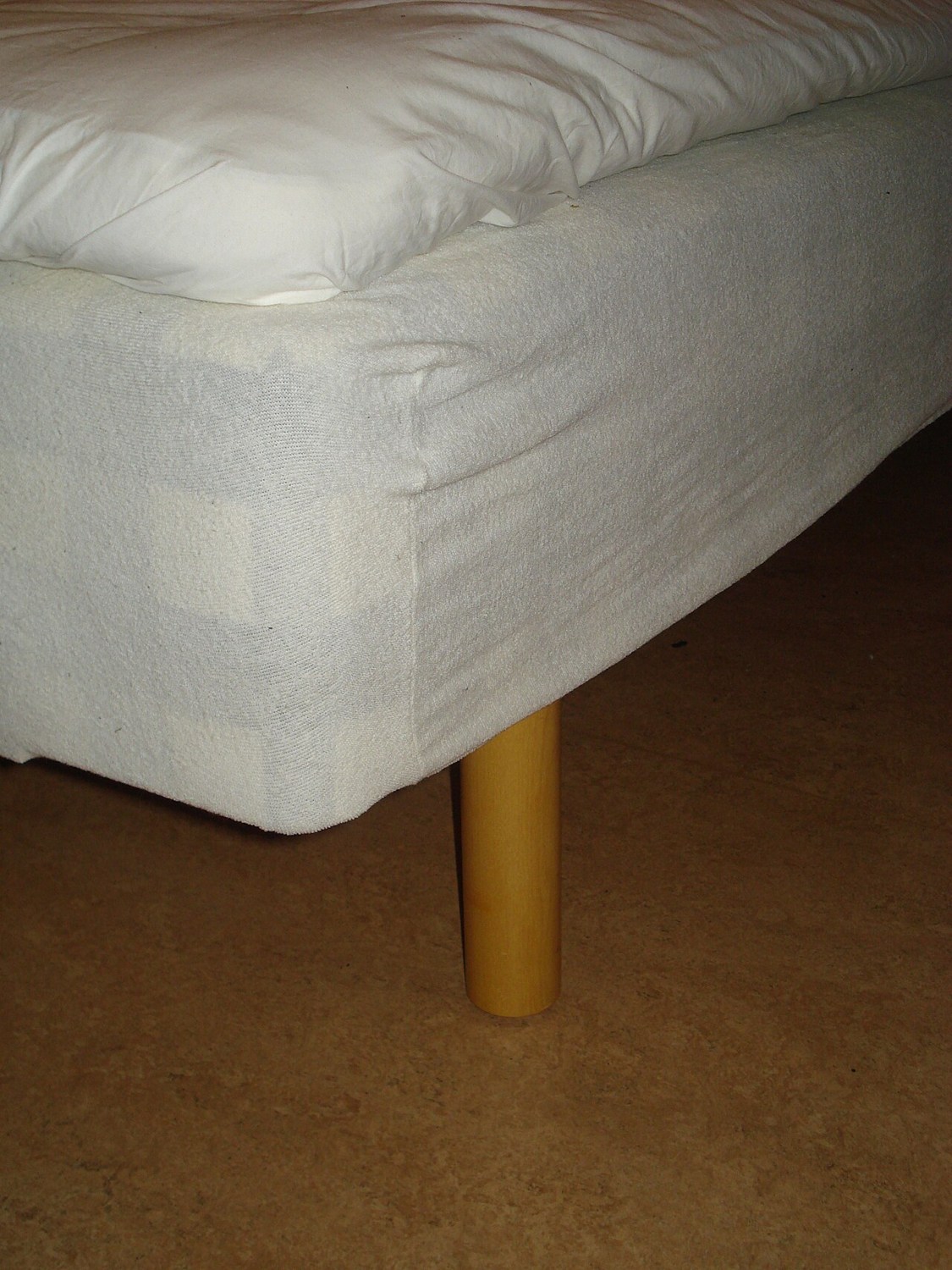
Measure the mattress as it is used
Start with width and length, then measure the depth of the mattress. If a topper will sit inside the protector, include its height. A fitted protector can match the mattress's surface dimensions yet fail to reach around a deep side. Look for the supported depth range rather than assuming all products called double fit the same arrangement.
Consider how the protector is held in place. Elastic corners, a fitted skirt and a complete enclosure are different constructions. Check whether the design covers only the upper surface or more of the mattress. Choose the coverage you need without assuming that every product described as a protector performs the same job.
Read the protection claim precisely
Waterproof, absorbent and quilted are not interchangeable descriptions. If resistance to liquid is essential, look for an explicit claim and its care requirements. A softly padded surface does not by itself establish a waterproof layer. Equally, waterproofing does not tell you how the fabric will feel or sound under a sheet.
Try to assess the complete bed, including the fitted sheet you will use. Added layers can change the feel of the mattress. A thick protector is not a substitute for a topper merely because both add material. Decide whether the purpose is protecting the mattress, changing the surface feel or both, then read the product's stated function.
Washing determines the useful spare
Check washing temperature, drying method and whether repeated care has specific restrictions. A protector that needs a long drying time may leave the mattress uncovered unless you have a spare. Think about how quickly you need the bed ready again rather than buying only by the first purchase price.
Do not assume that hotter washing or extra cleaning products improve protection. Follow the instructions for the actual membrane and fabric. If the product becomes damaged, inspect the manufacturer's guidance about replacement rather than relying on appearance alone to judge whether a protective layer still works.
Keep the fit stable
After fitting, check that corners remain seated and the protector lies as intended without pulling the mattress out of shape. Make sure the sheet still reaches securely over the complete stack. If the protector repeatedly moves, reassess depth and attachment rather than simply tightening an unsuitable arrangement.
Keep the size and care label information with your bedding notes. A properly fitting protector that can be cleaned and returned to use reliably is more useful than one offering an impressive list of claims but no workable fit for your mattress.